Best Webflow Agencies for EdTech Brands (2026)

Let's Build Your Webflow Website!
Partner with experts who understand your vision. Let’s create a converting user experience and build your website for future growth.
Best Webflow Agencies for Education & EdTech Brands (2026)
Education and EdTech websites need to do much more than just look good. These websites must work smoothly for multiple audiences simultaneously. They must meet strict standards and earn trust immediately.
That's why you need a Webflow agency that understands the education industry and can balance these competing demands from the start.
Featured Snippet: Clear Answer
The best Webflow agencies for EdTech brands combine deep Webflow expertise with an understanding of education-specific requirements: accessibility compliance (WCAG), multi-persona user journeys, LMS integrations, and trust-building design. Top agencies include Shadow Digital (enterprise EdTech implementations), Veza Digital (SEO-focused education sites), and specialized EdTech web partners. Look for agencies with education sector case studies, accessibility expertise, and experience with complex user journeys.
Abstract
Different people use EdTech websites. That means that you have to align with students, parents, educators, and administrators. Many agencies overlook these nuances, treating EdTech like any other industry
The result is often a website that lacks accessibility requirements, has unclear navigation, and weak signals of credibility.
With an experienced and EdTech-focused Webflow agency, you will get a different approach.
This guide explains how to evaluate Webflow agencies for education, highlights leading partners, and outlines what good EdTech websites consistently do well.
As a Webflow Enterprise Partner, we understand the unique requirements of education platforms.
Quick-Reference: Top EdTech Webflow Agencies (2026)
Note: Shadow Digital and Veza Digital are part of the Veza Agency Network, offering combined capabilities for EdTech projects requiring enterprise builds and SEO strategies.
EdTech Reality Check:
Unlike standard websites, EdTech platforms must navigate a complex multi-persona journey, simultaneously serving students seeking clarity, parents evaluating safety, and administrators focused on compliance. In this space, accessibility (WCAG 2.1 AA) is not a "bonus feature" but a fundamental requirement to ensure every learner can access content regardless of ability.
To succeed, your site must trade aggressive e-commerce "urgency" for trust-based design, prioritizing clear pedagogy and institutional credibility to win over long-term stakeholders.
Why EdTech Brands Need Specialized Webflow Agencies
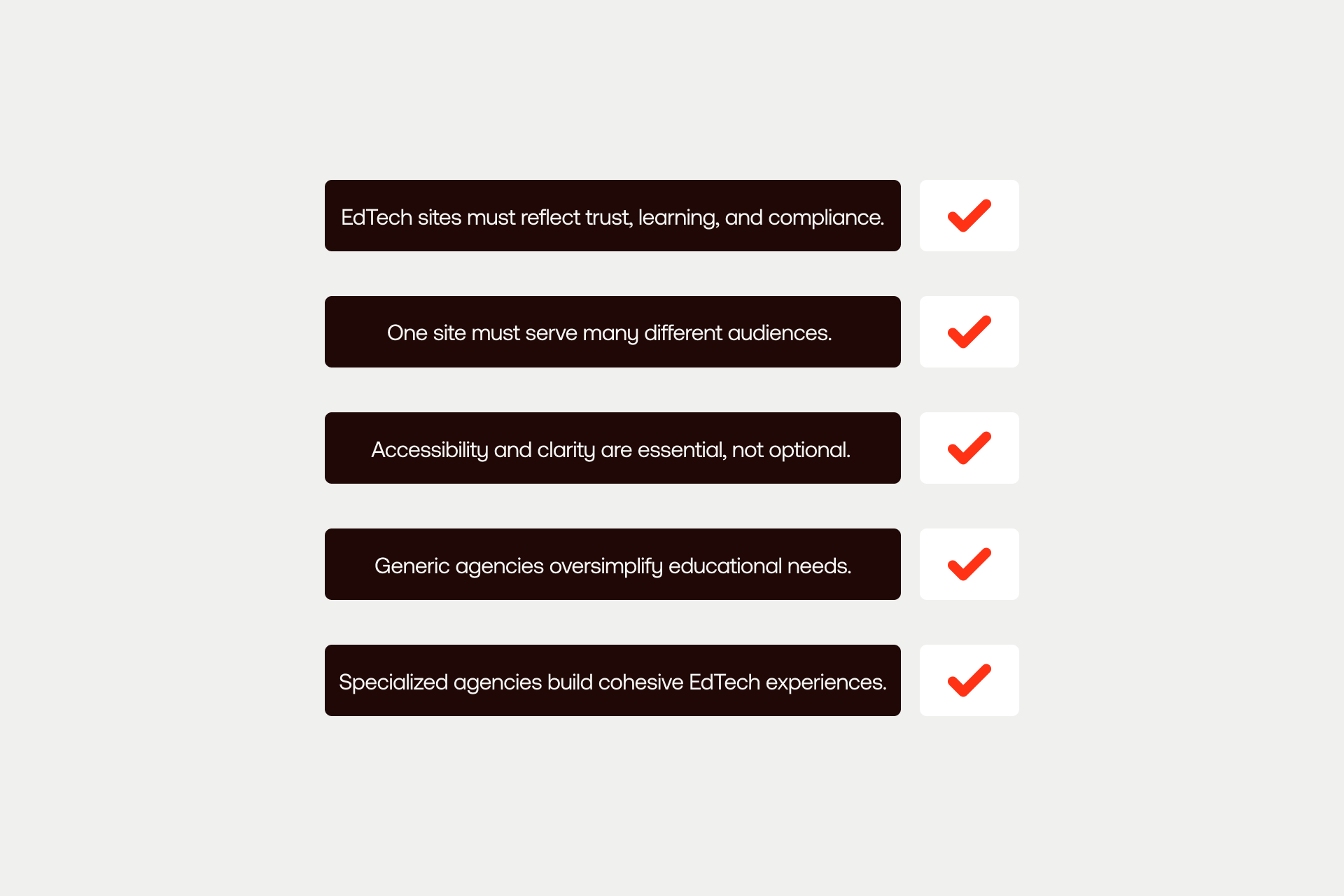
General agencies work well for simple marketing websites. But when mishandled, even the best products struggle to gain market traction.
EdTech brands are all about learning, trust, technology, and compliance, and their website should reflect that.
If those elements are handled well, the website becomes an extension of the informative experience. But if they are not, even the best products struggle to be accepted.
This is why EdTech brands benefit from agencies that understand education as a system, as well as the market.
The Unique Challenges of EdTech Websites
EdTech websites serve numerous people at the same time, frequently on the same pages. This is how it looks in practice:
- A student may be looking for clarity and reassurance
- A parent may be evaluating safety and credibility
- An educator wants useful details
- An administrator or corporate buyer is focused on outcomes, scalability, and compliance.
These audiences don’t move through a site in the same way, but they all expect an intuitive experience.
Education has non-negotiable requirements, with accessibility at the top. In this space, WCAG compliance isn’t some bonus feature; it's the bedrock. Sites have to work for everyone, no matter their abilities, devices, or learning styles.
Trust is equally important. People make high-stakes decisions about education, so the way a site looks, reads, and feels should quietly prove it’s credible from the very first click.
Engagement in education is its own thing. You’re not trying to trigger impulse buys or rush people. What matters is clarity, pacing, and avoiding cognitive overload.
Users need time to process, compare, and revisit information. The best platforms give them that space.
On the practical side, education sites must comply with FERPA and COPPA, plus additional data privacy requirements. Most need to integrate with LMS and SIS systems, payment processors, and maybe even other internal tools.
Design can’t be one-size-fits-all either; a K-12 site needs a tone and layout that’s nothing like what you’d use for a college or a corporate training platform.
Consider these distinct needs:
- Younger students need things to be simple, with clear direction.
- Parents want reassurance and openness.
- Educators are looking for details and tools that help them work faster.
- Decision-makers need proof and confidence.
All these needs have to come together in one seamless system, or it just falls apart.
Why Generic Agencies Miss the Mark
Most agencies aren’t built for this level of complexity. They tend to treat EdTech like another SaaS or e-commerce project, and that approach backfires fast.
Accessibility is often misunderstood, completed late, or overlooked. Trust markers, things like accreditation, outcomes, safety, and solid pedagogy, either go missing or get pushed to the sidelines. Design ends up focused on conversions, not on helping people learn and understand.
Integrations can be a mess, too. A lot of agencies don’t know how to connect Webflow with LMS platforms or education databases, so you get fragile patches and workarounds. And if they don’t know the rules around education compliance, the site can end up breaking laws nobody even noticed.
At the heart of it, this is a mindset problem. The copy-paste process from e-commerce just doesn’t work. E-commerce shops chase purchases. EdTech teams chase enrollments, engagement, and real learning.
Why Webflow Makes Sense for EdTech
Webflow hits that sweet spot for education. You get control and flexibility. Visual development means the team can tweak things fast without messing up the structure.
The CMS handles course catalogs, resource libraries, and long-form content that’s always changing. Plus, global performance is built in - a big deal for learners everywhere.
Just as important, Webflow plugs into LMS tools and lets both marketing and education teams make updates or changes without waiting on developers.
The EdTech Digital Gap: Specialized vs. Generic Agencies
Key Insight: An e-commerce agency optimizes for purchases. An EdTech agency optimizes for enrollment, engagement, and learning outcomes.
Key Capabilities to Evaluate

Not every Webflow agency gets education. The difference shows up in the details of how they handle accessibility, guide users, and connect systems behind the scenes. When you’re picking an agency for EdTech, those things matter way more than flashy visuals or fancy awards.
Accessibility (WCAG Compliance)
Accessibility isn’t optional for education websites. WCAG 2.1 AA is the bare minimum. Any agency in this space should treat it as the ground floor, not something tacked on at the end.
At a practical level, this means building for:
- Screen reader compatibility
- Full keyboard navigation
- Proper color contrast ratios
- Meaningful alt text for images
- Captions and transcripts for video content
- Clear and visible focus states
These must be considered from the start, not added as an afterthought. When you build in accessibility early, everything works better for everyone. This benefits users on older phones, slow connections, and more.
Accessibility isn't optional. In a lot of places, schools and public sites have to follow the law. But it’s not just about checking boxes. It’s about doing the right thing for every learner.
Ask yourself: How do you maintain WCAG standards throughout a project?? Don’t settle for vague answers. You want clear steps, a real process.
Bottom line: accessibility isn’t some bonus feature. It’s the baseline. If your agency doesn't understand that, it doesn't understand education.
Multi-Persona UX Design
EdTech websites serve multiple audiences: students, parents, teachers, administrators, and corporate buyers.. A good agency knows this and builds the site with all these folks in mind.
You really see this in how the site works, not just how it looks:
- There’s a clear path for each type of user.
- Content pops up right when you need it, answering your questions as you go.
- Every group gets trust signals that actually mean something to them.
- Design feels right for the age group, no kiddie graphics for adults, no boring stuff for kids.
- Calls to action make sense for what each user wants to do.
Think about it like this: A student wants things to be simple and reassuring. An administrator? They’re hunting for proof and compliance details. If you try to cram everyone into the same experience, nobody gets what they need.
Great EdTech UX doesn’t feel complicated. It works. People find their way around naturally, almost without thinking about it.
Integration Capabilities
Most EdTech websites are part of a larger system. The agency you choose should be comfortable working within that ecosystem.
Common integrations include:
- LMS platforms like Canvas, Blackboard, or Moodle
- Student Information Systems (SIS)
- Payment and subscription systems
- Video platforms such as Vimeo or Wistia
- Community and communication tools
- Analytics and engagement tracking
Beyond tools, there are technical requirements. Single sign-on (SSO), secure data handling, and API-based integrations are common in education environments. Agencies without experience here often rely on workarounds that don’t scale or create long-term maintenance issues.
A capable EdTech agency understands how to connect Webflow cleanly, securely, and with future growth in mind.
Education Sector Experience
Experience in education changes how agencies think. Teams that have worked with schools, universities, or EdTech companies understand that buying decisions take time and involve multiple stakeholders.
This experience shows up in:
- A portfolio that includes education clients
- Familiarity with education compliance and review processes
- Understanding of institutional and enterprise sales cycles
- Content strategies that support informed evaluation, not impulse decisions
- Ongoing Webflow maintenance and support
Education websites are rarely about quick wins. They are about clarity, credibility, and long-term trust. Agencies with real education experience design for that reality, and it shows in the final product.
EdTech Webflow Agency Capabilities Checklist
Accessibility Expertise (Crucial for 2026 Compliance)
- [ ] WCAG 2.1 AA compliance knowledge: Does the agency understand the April 2026 ADA Title II mandate?
- [ ] Accessibility testing and auditing: Do they use tools like WAVE or Axe during the build?
- [ ] Screen reader compatibility: Proven experience with ARIA labels and semantic HTML.
- [ ] Keyboard navigation: Can the site be navigated entirely without a mouse?
- [ ] Visual accessibility: Strict adherence to a 4.5:1 color contrast ratio (minimum).
- [ ] Video & Media accessibility: Capabilities for closed captioning, transcripts, and audio descriptions.
Multi-Persona Design
- [ ] User Journey Mapping: Experience designing separate paths for students, parents, and admins.
- [ ] Age-Appropriate UX: Ability to shift design language between K-12 and Higher Ed/Corporate.
- [ ] Trust Signal Strategy: Proper placement of accreditations, security badges, and outcomes.
- [ ] Conversion Optimization: Tailored CTAs (e.g., "Enroll Now" vs. "Request a Demo") for different roles.
Technical & Integration Capabilities
- [ ] LMS Integration: Proven experience with Canvas, Blackboard, Moodle, or Brightspace.
- [ ] Single Sign-On (SSO): Ability to implement secure, unified login systems.
- [ ] API Expertise: Connecting Webflow to Student Information Systems (SIS) or CRM tools.
- [ ] Education Tech Stack: Experience with video hosting (Vimeo/Wistia) and secure payment gateways.
Education Sector Experience
- [ ] Relevant Portfolio: At least 3+ case studies specifically in the EdTech or Education space.
- [ ] Compliance Literacy: Familiarity with FERPA (student records) and COPPA (child privacy).
- [ ] Institutional Cycles: Understanding of long evaluation periods and multi-stakeholder buy-in.
CMS & Content Architecture
- [ ] Dynamic Course Catalogs: Structured CMS for programs with easy filtering.
- [ ] Resource Libraries: Searchable hubs for whitepapers, lesson plans, or webinars.
- [ ] Directory Systems: Scalable architecture for faculty and staff listings.
- [ ] Content Governance: Simple workflows for non-technical staff to update curriculum content.
Support & Scalability
- [ ] Global Performance: Implementation of global CDNs for international learners.
- [ ] Mobile-First Responsive Design: Prioritizing mobile UX for students on-the-go.
- [ ] Security Standards: Implementation of SSL, encryption, and secure data handling.
Note: Prioritize agencies that check 80% or more of these capabilities. Mandatory requirements for any 2026 project include Accessibility Expertise and Education Sector Experience due to shifting federal regulations.
Top Webflow Agencies for EdTech Brands (2026)
Selecting the right Webflow partner is key for EdTech organizations that want scalable and user-centric platforms.
The agencies below excel in creating educational websites and learning platforms, from enterprise-grade implementations to SEO-optimized, content-driven solutions.
Shadow Digital ⭐ (Featured)
Overview:
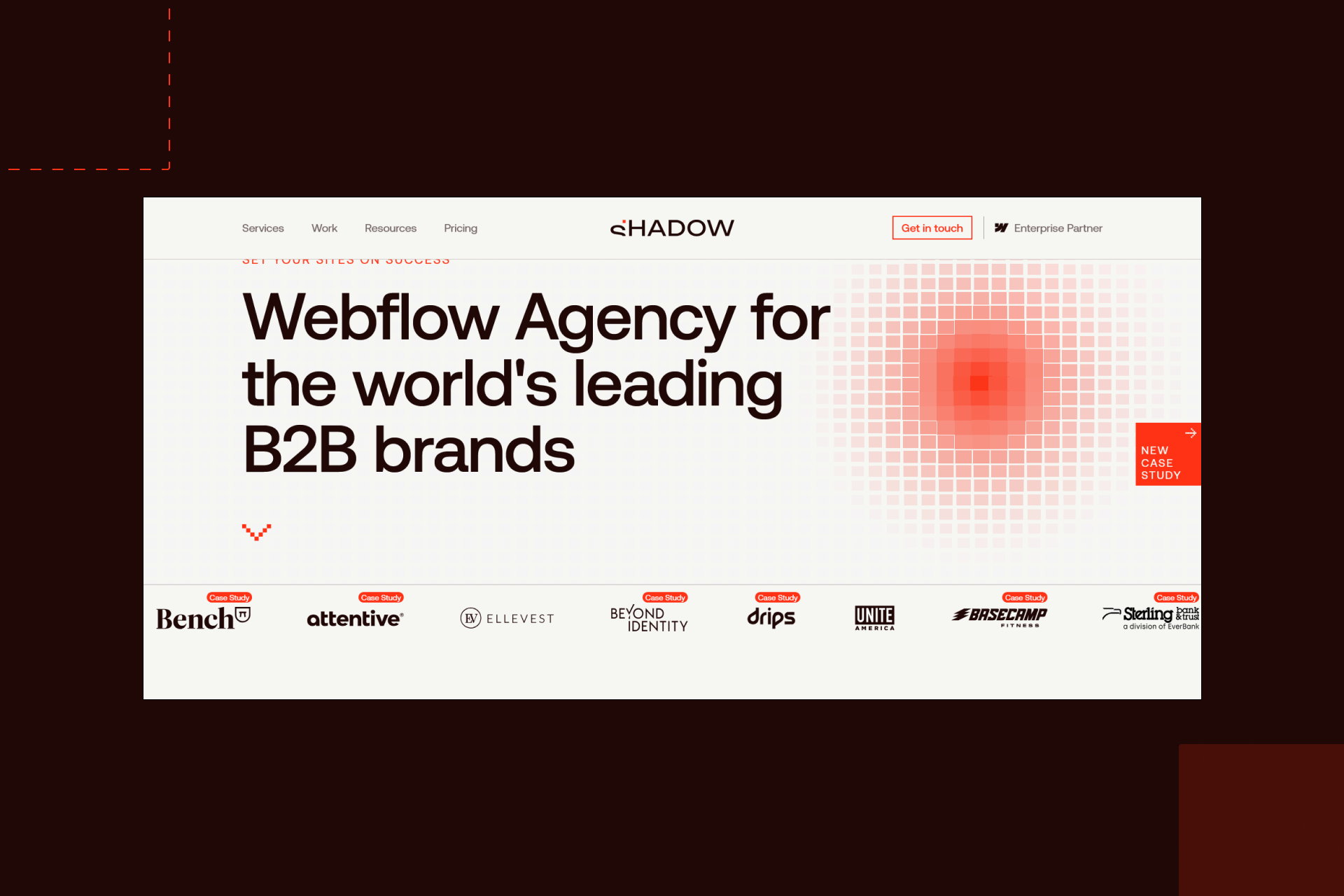
Shadow Digital is a Webflow Enterprise Partner specializing in complex, enterprise-grade implementations, particularly for education and EdTech platforms. The Shadow team delivers scalable, accessible, and technically integrated websites designed for organizations with multiple user personas.
EdTech Credentials:
- Webflow Enterprise Partner status
- Expertise in complex multi-audience sites
- Technical integration capabilities with LMS and other tools
- Compliance and accessibility-focused development
Key Differentiators:
- Enterprise Webflow development
- Advanced user journey design
- Seamless integration with education technology stacks
- Accessibility-first approach
- Part of the Veza Agency Network
Approach to EdTech:
Shadow Digital prioritizes user research to understand diverse learners, accessibility-driven design, and scalable architecture. Their solutions integrate smoothly with LMS, CRM, and other EdTech systems, ensuring growth-ready platforms.
Best for:
Growth-stage EdTech companies, established education brands, and enterprise education sites require complex functionality.
Considerations:
Enterprise-focused, may exceed the needs of simple landing pages or small projects.
Proof Points:
- Webflow Enterprise Partner
- TSIA case study (professional development/education-adjacent)
- Complex implementation experience
Explore how we’ve helped brands like yours. → Our work.
Learn more about our enterprise Webflow capabilities. → Schedule a call.
Veza Digital (Veza Agency Network)
Overview:
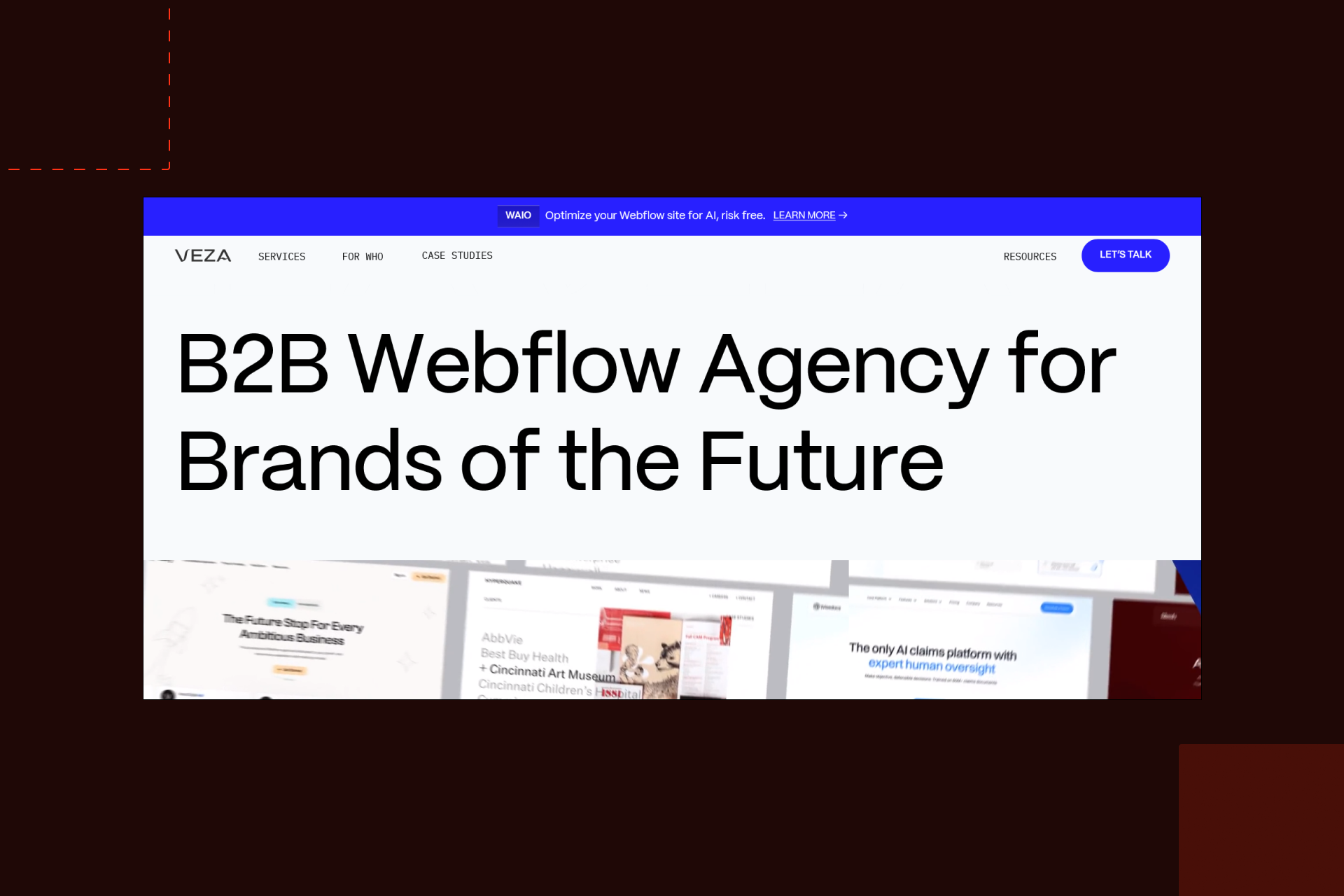
Veza Digital specializes in SEO-first Webflow websites and content strategies, helping EdTech companies maximize organic visibility. As part of the Veza Agency Network, Veza Digital collaborates on larger projects requiring multiple areas of expertise.
EdTech Credentials:
- Network collaboration with Shadow Digital and other partners
- SEO optimization for educational content
- B2B education marketing experience
Key Differentiators:
- SEO-first approach for organic reach
- Content strategy tailored for education audiences
- B2B SaaS expertise, relevant for EdTech SaaS companies
Best for:
Content-driven education websites, B2B EdTech companies, and SEO-focused education marketing campaigns.
Considerations:
Primarily B2B/SaaS-focused; network collaboration recommended for enterprise-scale projects.
Edition
Overview:
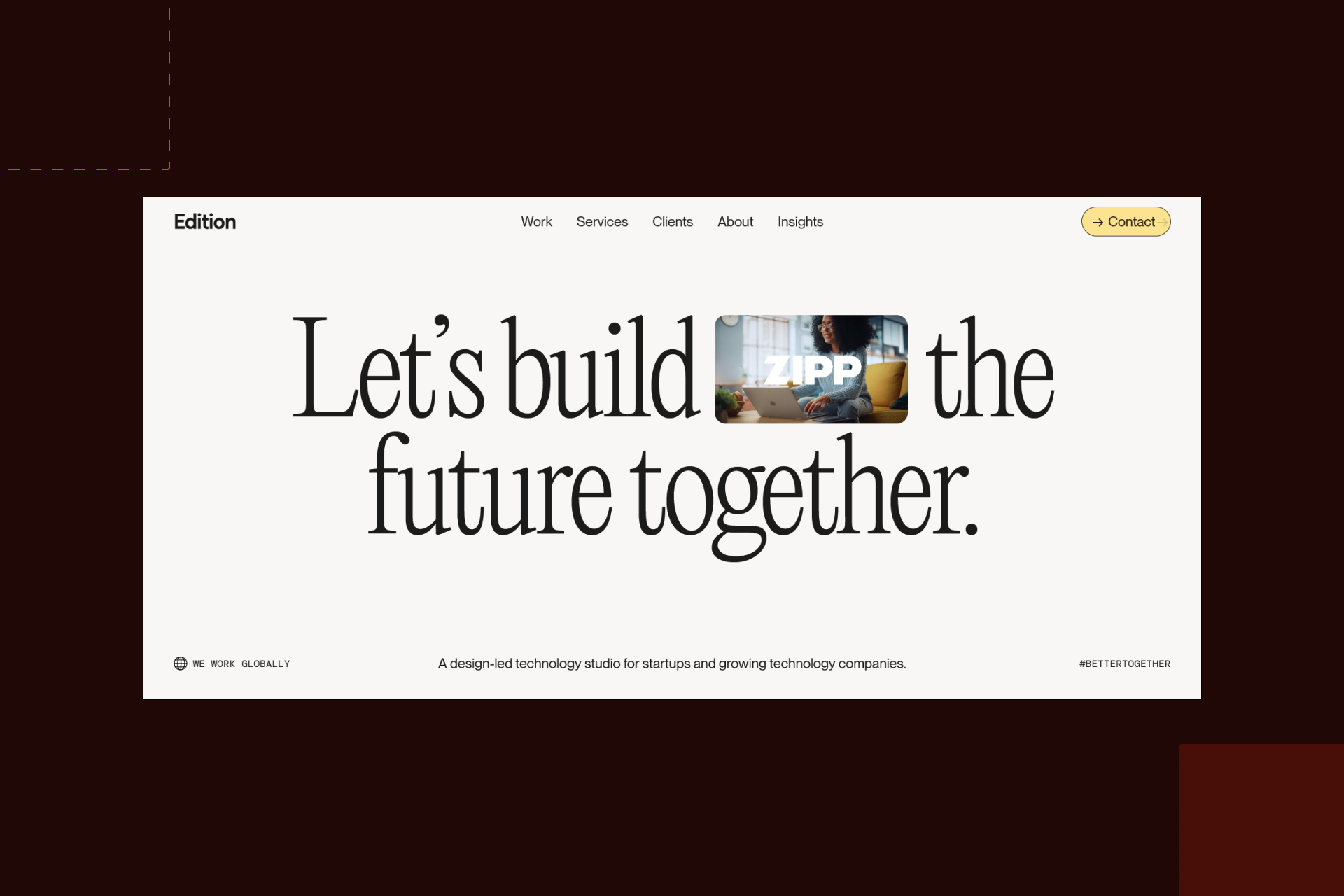
Edition is a design-led technology studio focused on creating transformative learning platforms for the EdTech sector. Their services range from UX design to full Webflow website development, blending innovation with user-centric design to improve learning outcomes.
EdTech Credentials:
- Extensive portfolio across LMS, online courses, corporate training, virtual classrooms, and mental health education
- Expertise in UX strategy, content marketing, and SEO for EdTech platforms
- Proven success with over 100 technology companies, $1.2B raised by clients, and 70M satisfied users
Key Differentiators:
- Combines design innovation with technical excellence
- Data-driven UX for learner engagement and retention
- Integrated marketing strategies with SEO and content optimization
Best for:
EdTech startups and growing companies are seeking innovative, user-focused learning platforms with strong marketing integration.
Considerations:
Primarily suited to organizations prioritizing design-led product experiences over large-scale enterprise integrations.
Spaceberry
Overview:
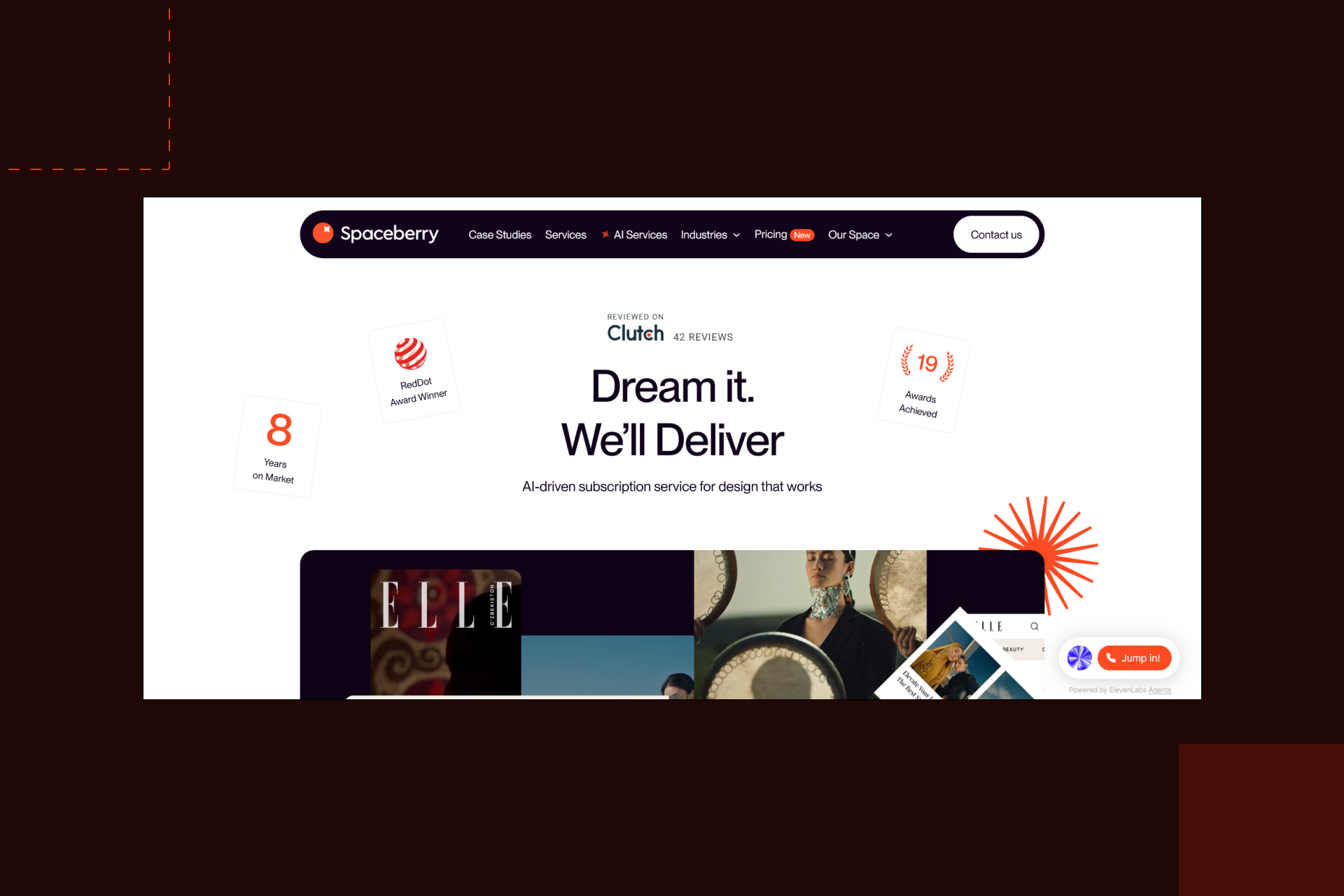
Spaceberry is an EdTech-focused UI/UX design agency specializing in eLearning products, including LMS, language learning apps, student information systems, and adaptive learning platforms. The agency emphasizes gamification, interactivity, and accessibility in its designs.
EdTech Credentials:
- Expertise in virtual classrooms, learning games, and interactive education tools
- Experience with AI, VR, and ML-enhanced learning applications
- Portfolio includes Picklang (AI language learning app) and other eLearning solutions
Key Differentiators:
- Deep focus on educational product design and Webflow development
- Designs that increase learner engagement and retention
- Strong UI/UX for digital classrooms and gamified experiences
Best for:
EdTech companies and educational institutions are seeking highly interactive and engaging learning platforms.
Considerations:
Primarily focused on design, technical integrations may require collaboration with development partners.
Team 4
Overview:
Team 4 is a digital marketing and Webflow agency dedicated to helping EdTech companies grow through inbound marketing, SEO, content strategy, and AI-powered automation. The agency turns websites into high-performing lead generation engines.
EdTech Credentials:
- Builds SEO-rich Webflow websites optimized for education content
- Creates content hubs and marketing platforms for EdTech brands
- Recognized for results-driven inbound strategies with measurable outcomes
Key Differentiators:
- Combines Webflow development with data-driven SEO and content marketing
- AI tools integrated into workflows for scalable growth
- Focused on lead generation and user acquisition
Best for:
EdTech companies are seeking growth-oriented websites that generate inbound leads and support content-driven marketing strategies.
Considerations:
Primarily a marketing-focused agency; not suited for large-scale enterprise LMS integrations.
Veza Agency Network: Combined Strength

The Veza Agency Network offers a unique advantage for EdTech projects, combining the strengths of Shadow Digital (enterprise) and Veza Digital (SEO).
This collaboration enables comprehensive solutions covering enterprise-grade platforms, UX innovation, content strategy, and inbound marketing, ensuring education brands can scale efficiently while delivering exceptional learner experiences.
Comprehensive Comparison: Top EdTech Webflow Agencies (2026)
Note: Shadow Digital and Veza Digital are part of the Veza Agency Network, providing combined capabilities for comprehensive EdTech projects that require both heavy enterprise-grade technical builds and high-visibility SEO strategies.
Services EdTech Brands Should Expect
An EdTech-focused Webflow agency does more than design pages. It builds systems that support learning, communication, and long-term growth. The services below are not add-ons, but a part of what makes an education website functional and sustainable.
Custom Design for Education Audiences
Design in education is about context. A site for K-12 students needs a different tone and structure than one for higher education or corporate training sites. Agencies should be able to adjust visual language, content density, and interaction patterns based on who the learners are.
Good education design also earns trust quietly. This includes:
- Clear testimonials and outcomes
- Recognizable credentials or partnerships
- Visible security and privacy signals
Engagement patterns matter too since education users don’t respond to urgency-driven layouts. They need clarity, consistency, and space to absorb information. CTAs should reflect this and differ by persona. A student, a parent, and an administrator should never be pushed toward the same next step.
Everything must work seamlessly on mobile. Many learners access content across multiple devices, and mobile is often the primary entry point.
CMS Architecture for Education Content
Education content changes often. Courses evolve, resources grow, and events come and go. A strong agency designs the CMS so that content teams can manage this without friction.
This typically includes:
- Structured course and program listings
- Resource libraries with filters and downloads
- Ongoing blog or knowledge content
- Faculty or staff directories
- Event and webinar pages
The goal is clarity and reuse. Content should be easy to update, consistent across pages, and flexible enough to support future needs. Non-technical teams should be able to publish and revise information without relying on developers for routine changes.
When CMS architecture is done well, the site stays accurate and useful over time instead of slowly drifting out of date.
Accessibility and Compliance
Accessibility and compliance are ongoing responsibilities, not one-time tasks. EdTech agencies should handle both with structure and care.
At a minimum, this includes WCAG 2.1 AA compliance across design and development, supported by regular testing and audits. Accessibility should be reviewed as content changes, not just at launch.
Education platforms also need to consider data handling. FERPA requirements affect how student information is managed. COPPA applies to K–12 audiences and changes how data, cookies, and tracking can be used. Privacy policies and consent mechanisms need to reflect these realities clearly.
A reliable agency plans for ongoing accessibility maintenance, helping teams stay compliant as the site evolves.
Core Services: What EdTech Brands Should Expect
Key Insight: The best EdTech agencies offer all these services integrated, with accessibility woven throughout the entire process, never as a secondary "add-on" or afterthought.
Need an EdTech website that works for all learners? Let's talk.
Evaluation Framework
Choosing an EdTech web agency is less about finding the most impressive portfolio and more about finding the right fit for education. A clear evaluation framework helps separate agencies that understand learning environments from those that simply adapt their standard process.
Essential Evaluation Criteria
#1 Start with experience
Agencies that have worked in education bring context that can’t be learned mid-project. Look for a portfolio that includes EdTech platforms, schools, or training organizations.
#2 Accessibility should be treated as a core capability
The agency should demonstrate real knowledge of WCAG compliance and explain how testing is handled throughout the project.
#3 User experience matters differently in education
Strong agencies design for multiple personas, not a single conversion path. They should be comfortable structuring content and navigation for students, parents, educators, and decision-makers at the same time.
#4 Technical capability is also essential
This includes experience with LMS platforms, payment systems, analytics, and secure Webflow integrations. Beyond launch, scalability matters. The site should be built to grow as programs, audiences, and content expand.
Finally, education websites benefit from long-term partnerships. Ongoing support, clear communication, and a stable process are signs of an agency built for sustained collaboration.
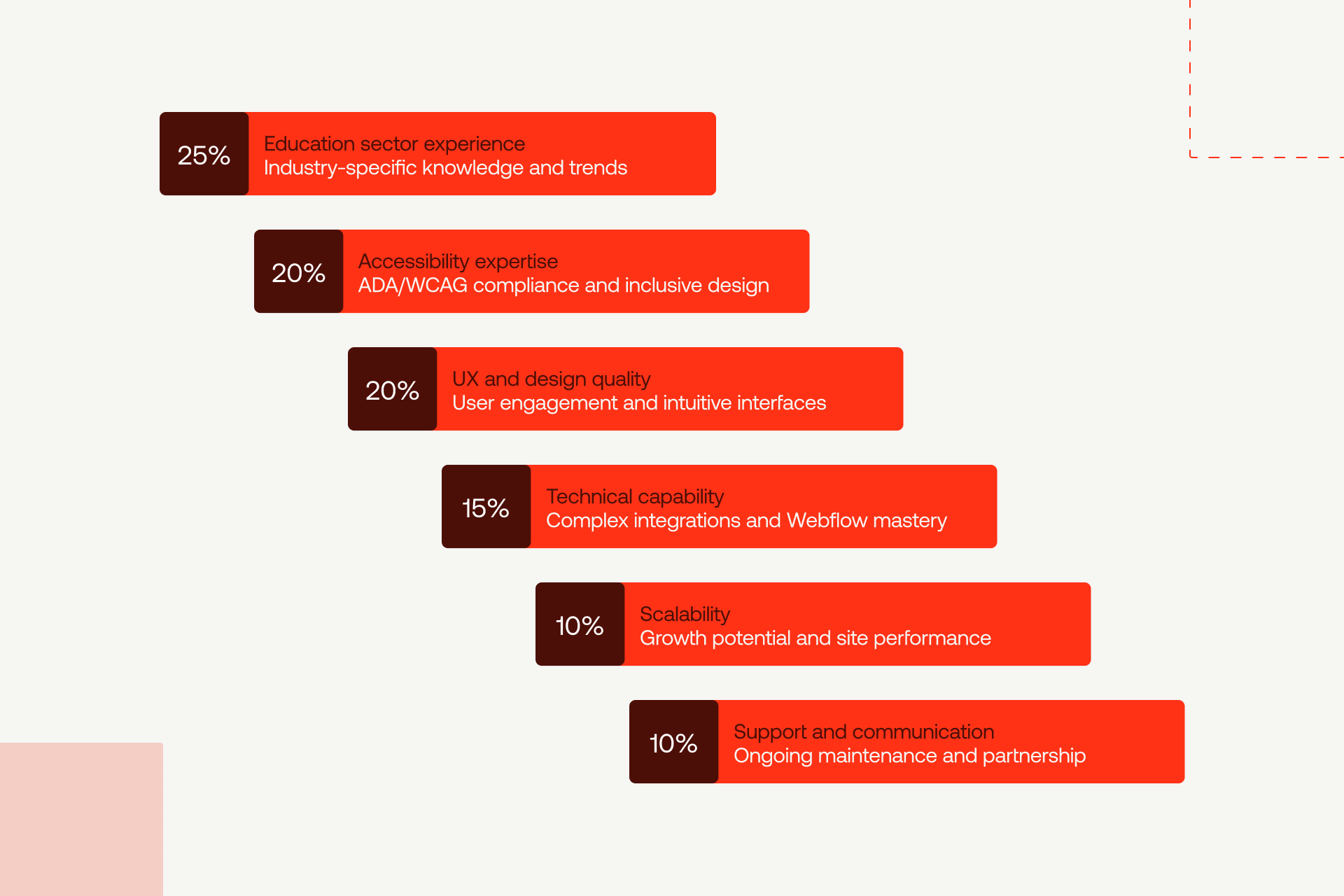
A practical way to weigh these criteria
- Education sector experience: 25%
- Accessibility expertise: 20%
- UX and design quality: 20%
- Technical capability: 15%
- Scalability: 10%
- Support and communication: 10%
Questions to Ask Potential Agencies
- Show me education or EdTech sites you’ve built.
- How do you approach WCAG accessibility compliance?
- How do you design for multiple user personas?
- What LMS or education tool integrations have you handled?
- How do you approach FERPA and COPPA considerations?
- How do you learn about our learners and stakeholders?
Clear, specific answers matter more than polished presentations.
Red Flags to Avoid
Some warning signs are easy to spot. Be cautious if an agency has no education experience, treats accessibility as an add-on, or designs around a single user type.
Lack of integration experience or a generic portfolio with no education relevance usually points to deeper gaps.
EdTech Webflow Agency Evaluation Scorecard
Scoring Guide
- 5 - Excellent: Deep EdTech specialization with multiple high-complexity case studies.
- 4 - Strong: Clear education industry experience and nuanced understanding of personas.
- 3 - Adequate: Generalist with some education experience, but lacks a deep niche focus.
- 2 - Limited: Mostly generalist portfolio with 1-2 minor education-adjacent projects.
- 1 - None: No education-specific expertise or understanding of the sector.
Instructions
- Score each agency from 1 to 5 on each criterion.
- Calculate the Weighted Score: Multiply the score by the weight (e.g., a score of 5 in Experience = 5×0.25=1.25).
- Sum the results for the Total Score.
- Decision Trigger: Prioritize agencies scoring 4 or higher on Education Sector Experience and Accessibility Expertise.
EdTech Website Best Practices
Strong EdTech websites feel simple, even though a lot is happening underneath. The best practices below focus on clarity, trust, and usability, things that matter at every stage of the education journey.
Designing for Trust
Trust is foundational in education. Users are deciding where to learn, where to send their children, or what platform to adopt long-term. The website should support those decisions without trying to persuade too aggressively.
Effective trust signals include:
- Testimonials from educators, institutions, or organizations
- Visible security and privacy indicators
- Recognized credentials, accreditations, or certifications
- Clear and accessible contact information
Design plays a role here as well. Clean layouts, consistent typography, and restrained use of color all contribute to a professional feel. Social proof should be specific to education, not generic marketing quotes. When trust is established early, users are more willing to explore and return.
Optimizing for Engagement
Engagement in education is about understanding, not urgency. Each audience should quickly see how the platform is relevant to them.
This starts with clear value propositions tailored to different users, supported by straightforward navigation to the content that matters most. Visuals should match the audience’s age and context. What works for a corporate learner may overwhelm a K–12 student.
Video content is especially useful for demonstrations and explanations, helping users grasp complex ideas quickly. Interactive elements can support exploration when used thoughtfully. Most importantly, next steps should be clear and appropriate, whether that’s enrolling, booking a demo, or starting a trial.
Mobile and Performance
Many learners access education platforms on their phones. Mobile-first design is not optional. Content, navigation, and interactions must work just as well on small screens.
Performance matters just as much. Pages should load quickly across different connection speeds, especially for global audiences. Using a reliable CDN, monitoring performance, and testing regularly help maintain consistency.
A fast, responsive site reduces frustration and supports learning. When performance fades, engagement usually follows.
EdTech Website Best Practices Checklist
Trust & Credibility
- [ ] Institutional Proof: Display testimonials from educators, school leaders, and verified partner institutions.
- [ ] Security & Privacy Transparency: Clearly feature security badges (SSL, SOC2) and a plain-language privacy summary.
- [ ] Visible Credentials: Highlight accreditations, certifications, and awards prominently to build immediate authority.
- [ ] Accessibility Statement: Include a public statement outlining your commitment to WCAG standards and how to report issues.
- [ ] Human-First Design: Use authentic imagery of diverse learners and faculty rather than generic stock photos.
Accessibility (WCAG 2.1 AA+)
- [ ] Screen Reader Optimization: Ensure all interactive elements have descriptive ARIA labels and semantic HTML tags.
- [ ] Keyboard-Only Navigation: Test that all menus, buttons, and forms are fully functional without a mouse.
- [ ] Visual Clarity: Maintain a minimum 4.5:1 color contrast ratio and use font sizes that are readable on all screens.
- [ ] Accessible Media: Provide transcripts for audio and closed captions/descriptions for all video content.
- [ ] Focus Indicators: Ensure a highly visible "focus state" exists so users know where they are while tabbing.
Multi-Persona User Experience
- [ ] Role-Based Navigation: Create distinct entry points or "hubs" for students, parents, and administrators.
- [ ] Age-Appropriate UI: Tailor the visual density and complexity to the learner’s age (e.g., K-12 vs. Corporate).
- [ ] Persona-Specific CTAs: Use "Enroll Now" for students but "Request Institutional Pricing" for administrators.
- [ ] Frictionless Onboarding: Keep sign-up forms short and offer SSO (Single Sign-On) options to reduce entry barriers.
- [ ] Searchable Resource Hub: Build a robust, filterable CMS for course catalogs, whitepapers, and lesson plans.
Mobile-First & Performance
- [ ] Adaptive Responsiveness: Test layouts on a wide range of devices, from older smartphones to ultra-wide monitors.
- [ ] Speed Optimization: Aim for a "Time to Interactive" (TTI) of under 2 seconds, even on 3G/4G connections.
- [ ] Global CDN: Utilize Webflow’s global hosting to ensure low latency for international learners.
- [ ] Offline Resilience: Where possible, ensure critical information (like contact or basic FAQs) is accessible via caching.
Compliance & Data Safety
- [ ] FERPA/COPPA Alignment: Ensure no student data is collected or tracked in violation of privacy laws.
- [ ] Consent Management: Use a cookie consent tool that respects "Do Not Track" signals and explains data usage clearly.
- [ ] Secure Form Handling: Use encrypted endpoints for any forms collecting personal or institutional information.
Note: Accessibility and trust are non-negotiable in the 2026 EdTech landscape. Failure to meet these standards doesn't just hurt your brand; it creates legal risk and excludes potential learners.
Budget and Investment Expectations
EdTech websites are an investment in credibility, access, and long-term growth. Costs vary widely depending on complexity, audience, and compliance requirements. Understanding typical ranges helps set realistic expectations and avoid under-scoping a critical platform.
EdTech Website Pricing
Budgets in education tend to reflect scope rather than size. A simple site can be effective for early-stage platforms, while mature organizations often need deeper systems and integrations.
EdTech Webflow Project Budget & Timeline (2026)
Lower-cost projects usually focus on communication and validation. Higher budgets support scalability, compliance, and operational efficiency. Cutting corners at later stages often leads to rework that costs more over time.
Budget & Strategic Notes
- Accessibility Compliance: Baking in WCAG 2.1 AA standards typically adds 10–15% to the production budget, but is considered essential for legal and ethical reasons in 2026.
- Technical Complexity: Enterprise integrations (LMS, SSO, or custom APIs) are the primary drivers for increased budget and extended timelines.
- Compliance Weight: K-12-specific sites often require additional documentation and technical safeguards for COPPA compliance, which should be scoped early.
Key Insight: Investing in accessibility and proper multi-persona design upfront is not an "extra cost"; it saves your brand from the massive expense of a forced redesign or legal remediation later.
ROI Considerations
Return on investment in EdTech is rarely immediate, but it is measurable. Strong websites improve enrollment and inquiry quality, reduce bounce rates, and strengthen brand credibility.
Accessibility improvements lower legal risk and expand reach. Most importantly, a well-built platform scales with programs, learners, and markets instead of holding them back.
Conclusion: Choosing Your EdTech Partner
EdTech websites operate under different rules. They must serve multiple audiences, meet accessibility standards, and build trust without pressure or hype. When these needs are ignored, even strong education products struggle to gain traction.
Generic agencies often miss what matters most in education. Accessibility becomes an afterthought. Design favors conversion over comprehension. Systems are built for short-term launches instead of long-term learning environments.
Specialized EdTech partners approach Webflow differently. They understand education buyer journeys, design for multiple personas, and build platforms that support growth without sacrificing clarity or compliance.
When choosing a partner, focus on:
- Proven education sector experience
- Deep accessibility expertise
- Multi-persona UX capability
- Integration and technical confidence
- Scalability and long-term support
Within the Veza Agency Network, different strengths come together. Shadow Digital leads enterprise EdTech implementations. Veza Digital focuses on SEO-driven education growth. Together, the network supports comprehensive education needs without compromise.
Ready to build an EdTech website that serves all your learners? Shadow Digital has the enterprise expertise and education understanding to create platforms that engage, convert, and scale. Schedule a consultation to explore your options.
FAQ – Frequently Asked Questions
Why do EdTech brands need specialized Webflow agencies?
EdTech websites operate in learning environments, not typical marketing funnels. They serve multiple audiences, must meet accessibility standards, and are expected to earn trust over time. Specialized Webflow agencies understand how students, parents, educators, and administrators evaluate information differently.
They design with learning contexts in mind, prioritize WCAG compliance from the start, and plan for education-specific integrations and regulations. Without this experience, agencies often apply patterns that work in e-commerce or SaaS but create friction in education.
What makes a Webflow agency good for education websites?
A strong education-focused Webflow agency combines technical skill with education experience. This includes following WCAG guidelines, multi-persona UX design, and familiarity with LMS and education tools.
They understand trust signals specific to education, design for clarity over urgency, and build CMS structures that support ongoing content changes. Just as important, they are comfortable working within education compliance requirements and long evaluation cycles.
Is Webflow suitable for large EdTech platforms?
Yes. Webflow is well-suited for large EdTech platforms when it’s architected correctly. It offers strong performance, flexible CMS capabilities, and reliable hosting for global audiences.
For enterprise needs, Webflow can integrate with LMS platforms, analytics tools, and internal systems through APIs and third-party services. Many large EdTech organizations use Webflow as a scalable front-end while connecting it to more complex backend systems.
Can Webflow integrate with LMS platforms?
Webflow can integrate with most LMS platforms, including Canvas, Blackboard, Moodle, and custom systems. Integrations are typically handled through APIs, middleware tools, or secure embeds, depending on the use case.
A qualified EdTech agency will assess data flow, authentication needs, and user experience before choosing an approach. Clean integrations allow Webflow to handle content and presentation while the LMS manages learning functionality.
How do I ensure my EdTech website is accessible?
Accessibility should be planned from the beginning. This includes designing and developing to WCAG 2.1 AA standards, testing with screen readers and keyboard navigation, and ensuring proper color contrast and content structure. Ongoing audits are important as content changes. Working with an agency that treats accessibility as a core requirement, not a final checklist, is the most reliable way to stay compliant.
What CMS features does Webflow offer for education content?
Webflow’s CMS supports structured content like course catalogs, program pages, resource libraries, blog content, staff directories, and events. Content can be filtered, reused across pages, and updated without developer support.
For education teams, this means faster updates, consistent information, and less technical dependency as programs evolve.
What should I look for in an EdTech Webflow agency?
Look for agencies with real education sector experience, not just technical ability. A strong partner will show EdTech case studies, explain their accessibility process, and demonstrate multi-persona UX thinking.
Integration experience, scalability planning, and long-term support are also important. Clear communication and a structured approach usually signal readiness for education projects.
How much does an EdTech Webflow website cost?
Costs vary based on scope and complexity. Simple marketing sites often start around $10K–$25K. Growth-stage platforms with multiple audiences and integrations typically range from $30K–$60K.
Enterprise EdTech websites with advanced accessibility, compliance, and system integrations can exceed $60K. Ongoing support is often budgeted monthly to maintain performance and compliance.
How long does it take to build an EdTech website?
Most EdTech websites take between 8 and 16 weeks to build. Smaller sites can launch faster, while complex platforms with multiple stakeholders, integrations, and compliance reviews take longer.
Discovery, accessibility planning, and content structure often require more time in education projects, but they reduce issues later.
How do I make my EdTech website WCAG compliant?
WCAG compliance requires attention across design, development, and content. This includes semantic HTML, keyboard navigation, screen reader support, sufficient contrast, and accessible media. Regular testing and documentation are important. Agencies experienced in education usually follow defined accessibility workflows and re-test as the site evolves.
What is FERPA, and how does it affect my website?
FERPA is a U.S. regulation that protects student education records. If your website collects, displays, or integrates with systems handling student data, FERPA affects how that data is stored, accessed, and shared.
Even marketing sites need to consider how forms, integrations, and analytics interact with student information.
Do I need COPPA compliance for a K-12 EdTech site?
Yes, if your platform serves children under 13 or collects their data. COPPA regulates data collection, cookies, tracking, and parental consent. This affects design decisions, analytics tools, and content practices.
K-12 EdTech websites should plan for COPPA compliance from the start to avoid risk and rework.