Best Real Estate Website Design Examples (2026)

Let's Build Your Webflow Website!
Partner with experts who understand your vision. Let’s create a converting user experience and build your website for future growth.
Best Real Estate Website Design Examples (2026)
A real estate website shows someone's future home. But the key isn’t to just show houses; it’s to make visitors feel at home before they even step inside.
At the same time, a real estate website must build trust and make it easy to act. The best real estate designs mix storytelling with practical tools, guiding buyers and sellers seamlessly from inspiration to action.
Quick Answers
Best real estate website design examples showcase the balance between aspirational visuals and functional lead generation. Top examples include Compass (luxury + technology), Sotheby's International Realty (premium brand), The Agency (lifestyle-focused), and Douglas Elliman (urban sophistication). The best real estate websites feature stunning hero sections with property search integration, high-quality photography, intuitive IDX-powered listings, strategic lead capture, and mobile-first design. They inspire emotion while making property discovery effortless.
Abstract
The most common challenge real estate websites face is balancing inspiration with function. This challenge affects buyers, agents, and brokerages. Buyers want to explore properties and envision their future homes, while agents and brokerages need a pre-built system to generate inquiries and leads. The most effective real estate websites are the ones that combine visuals, navigation, and lead-generation tools.
In this guide, we explore what makes real estate websites achieve this. We highlight design patterns and features every real estate professional should understand. You will also find inspiration and practical guidance.
As an Enterprise Webflow Partner, Shadow Digital builds sites that combine design with lead generation through our Webflow development services. Our experience with enterprise brands shapes the principles we shared in this guide.
Best Real Estate Website Design Examples
Competition in the real estate space is highsince some of the major sites, such as Zillow, Realtor.com, and Redfin, dominate property searches. This makes it essential for brokerage and agent websites to differentiate through brand, experience, and usability.
To succeed, real estate websites must carefully flow between aspiration and function. High-impact visuals introduce the lifestyle associated with a property or brand, while practical tools help visitors search listings, explore neighborhoods, and connect with agents. This has become even more important because of mobile browsing, with more than 60 percent of website traffic now coming from phones.
The difference between great real estate websites and average ones is how well they combine emotional appeal with usability.
Strong designs create an immediate visual impression through photography, layout, and branding. At the same time, they make property discovery seamless through intuitive search tools, clear navigation, and organized listing pages. Lead capture is also a part of the experience, guiding visitors toward inquiries or consultations.
Effective real estate websites also show local expertise and distinct brand positioning.
Across the industry, these sites generally fall into several categories:
- Luxury brokerage websites
- Residential agency websites
- Commercial real estate websites
- Individual realtor websites
- Property developer websites
Each category emphasizes different design priorities, but the most successful examples consistently combine visual storytelling with practical tools that help users move from exploration to action.
Key Features of Best Real Estate Website Design Examples
Now we will cover the key features of the best real estate website examples. You will find out why each of these features is important and how it shapes user experience in each visit.
Homepage Design
The homepage of a real estate website creates the first impression within three to five seconds. It’s connected to the emotional tone of the brand while helping visitors quickly determine whether they want to search for properties, connect with an agent, or explore listings.
Hero Section
Because visitors often arrive with different goals like buying, selling, or browsing, the homepage must support multiple user intents without creating confusion.
The hero section plays the most important role in this experience. Positioned at the top of the page, it combines imagery, messaging, and often property search functionality. Different design approaches serve different types of real estate businesses.
Hero Section Patterns
Professional photography
Home page design essentials also include high-quality imagery and professional photography so that the website looks polished.
Images are edited with a consistent visual style and often include both property photography and lifestyle shots that communicate how the home might be experienced.
Video is also increasingly expected, particularly for high-end listings and brand storytelling.
CTAs
Calls to action should be layered to match user intent. The primary action is usually a property search.
Secondary actions often encourage visitors to contact an agent or schedule a showing, while tertiary options may focus on selling a home.
Branding elements
Branding elements should remain consistent throughout the homepage.
Standard practices include placing the logo at the top left, maintaining a consistent color scheme across sections, and establishing a clear typography hierarchy that guides users through the page.
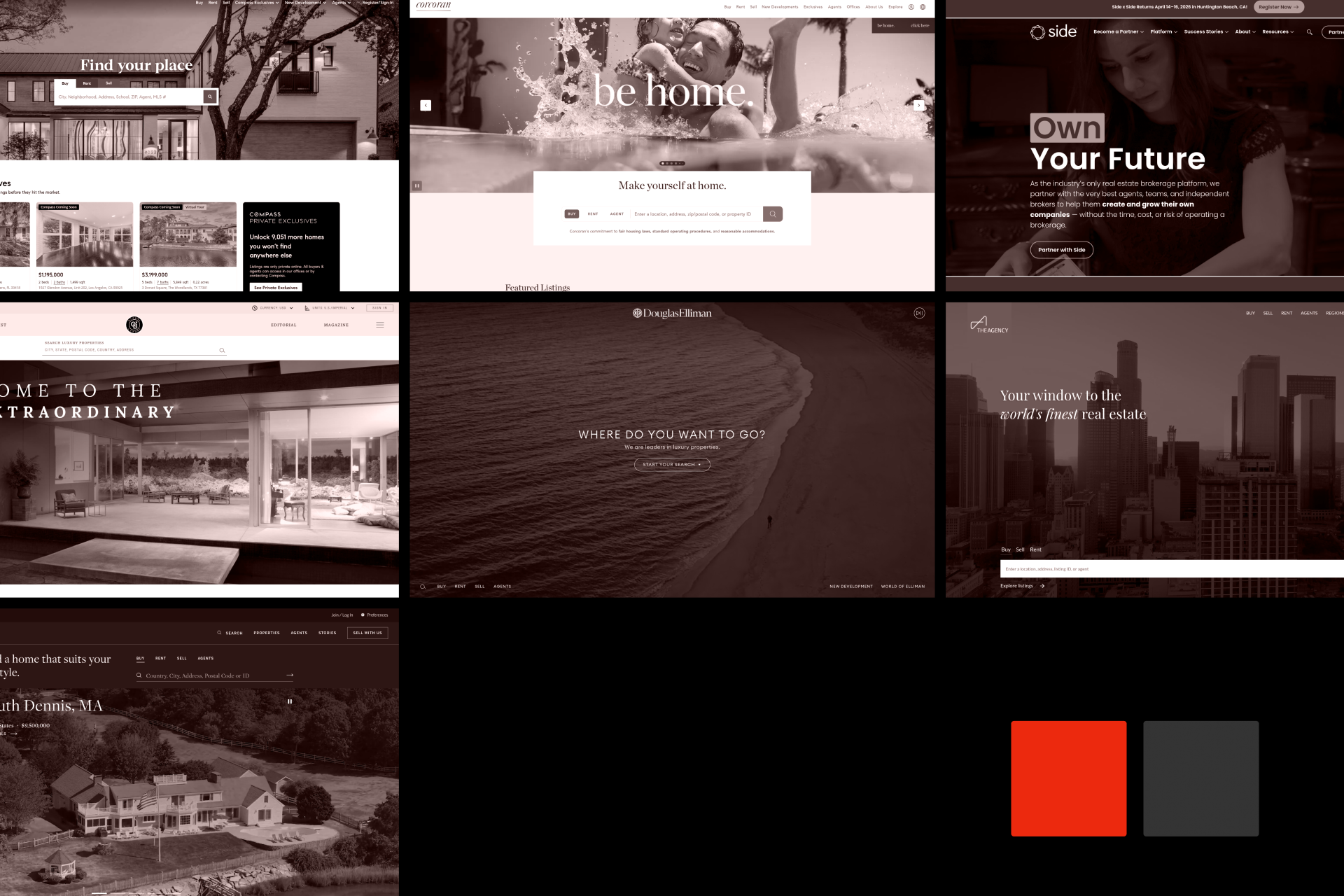
Note: Several real estate websites illustrate different homepage strategies. Compass uses a clean, search-focused approach. Sotheby's International Realty emphasizes luxury branding, while The Agency highlights lifestyle-driven imagery.
User Experience (UX) Design
Strong user experience design helps visitors navigate a real estate website quickly and without confusion. Clear structure allows users to move easily between browsing properties, learning about agents, and accessing useful resources.
Navigation
Navigation should remain simple and intuitive. Most brokerage websites organize their primary navigation around core actions such as buying, selling, or renting.
Additional navigation items often include agent or office directories and access to educational content such as guides or blog posts.
Navigation Patterns
Mobile-first design
Mobile-first design has become a standard requirement for real estate websites. More than 60 percent of traffic comes from mobile devices, making thumb-friendly navigation, simplified search tools, and fast-loading images essential.
Click-to-call functionality is also important, allowing visitors to connect with agents immediately from their phones.
Page speed
Page speed plays a critical role in keeping users engaged. Pages that take longer than three seconds to load often experience higher bounce rates.
Image optimization, lazy loading of listing images, and content delivery networks are commonly used to improve performance.
Accessibility
Accessibility is another important consideration. Property images should include descriptive alt text, navigation should support keyboard interaction, and color contrast should meet accessibility guidelines to ensure content is readable for all users.
UX
Design decisions should also reflect different user journeys. Buyers prioritize search and listings, sellers often want agent information or home valuation options, investors may seek market data, and renters typically want quick filtered searches.
UX Best Practices
Property Listings and Search Functionality
Property search is the central function of most real estate websites. The effectiveness of this experience depends heavily on IDX integration, search filters, and well-structured listing pages.
IDX, or Internet Data Exchange, allows real estate websites to display real-time property listings from the Multiple Listing Service (MLS). This integration enables brokerages and agents to present up-to-date property information while remaining compliant with MLS data-sharing requirements.
Several IDX providers support real estate websites with different strengths.
IDX Comparison
Search filters
Advanced search filters help visitors narrow results quickly.
Typical filters include:
- location by city, neighborhood, or zip code
- price range using sliders
- property type
- number of bedrooms and bathrooms
- square footage
- lot size
- year built
- property features such as pools or garages
- days on market
Map-based search
Map-based search adds another layer of discovery. Integration with mapping tools allows users to explore listings geographically, draw custom search areas, and view neighborhood boundaries. Additional information often includes nearby amenities, commute considerations, and school districts.
Property pages
Individual property pages should present information clearly and prioritize essential details.
Property Detail Elements
Listings
Listings are typically displayed using multiple viewing options. Grid view supports visual browsing, list view allows more detailed scanning, and map view emphasizes location.
Many websites also provide saved searches and favorites features, allowing users to track properties they are interested in.
Visual Design and Aesthetic
Visual design plays a central role in how real estate websites communicate trust, aspiration, and professionalism. Because property imagery is often the most compelling content on the site, the overall layout should allow photography to remain the primary focus.
Color Palettes
Clean, uncluttered layouts help guide visitors through property listings and key information. Consistent branding across color palettes, typography, and imagery reinforces the brokerage’s identity while maintaining a cohesive user experience.
Color Palettes by Segment
Typography
Typography choices also influence brand perception. Luxury and traditional brands often use serif fonts, while modern or contemporary brokerages favor sans-serif typefaces.
Regardless of style, typography must maintain a clear hierarchy between headings and body text and remain readable across devices.
Photography standards
Photography standards are particularly high in real estate. Professional photography is essential, with consistent color grading across property images.
Effective sites combine property images with lifestyle photography, professional agent headshots, and neighborhood imagery that provides local context.
Videos
Video is increasingly integrated into real estate websites. Common formats include hero background videos, property walkthroughs, drone footage, agent introduction videos, and market updates.
Whitespace
Whitespace plays an important role in maintaining a premium feel. Adequate spacing between elements helps images stand out and directs attention toward important calls to action.
Note: Design decisions should avoid common pitfalls such as outdated stock photography, overly complex layouts that compete with property images, auto-playing audio, and cluttered footer sections.
Visual Design Elements
Content and SEO Optimization
Content plays an important role in helping real estate websites attract search traffic and build trust with potential clients. Effective content strategies combine testimonials, local insights, and educational resources that support both buyers and sellers.
Client testimonials
Client testimonials are a common trust-building element. Many websites include written reviews alongside client photos, while others incorporate video testimonials.
Case studies of recently sold properties and integrations with reviews from platforms such as Google also help demonstrate credibility.
SEO
Search engine optimization for real estate websites often focuses on local search intent. Pages targeting phrases such as “homes for sale in [city]” or specific property types help brokerages appear in relevant search results.
Long-tail keywords that reference neighborhoods or property characteristics also support targeted traffic.
Localized content
Localized content strengthens these efforts. Hyperlocal neighborhood pages may highlight schools, amenities, lifestyle features, and market trends specific to a community.
These pages help users understand the local environment while improving visibility in local search results.
Blog
Blog or resource sections support ongoing content creation. Topics frequently include market updates, buying and selling tips, local events, investment insights, and home improvement guidance.
Similar design patterns appear in other industries as well. For comparison, see these best fintech website design examples.
Note: Structured data can further support search visibility. Schema markup commonly used on real estate websites includes LocalBusiness schema, RealEstateAgent schema, property listing schema, and review schema.
Content Strategy
Interactive Features and Functionality
Interactive features help transform a real estate website from a static listing platform into a lead-generation tool. Forms, chat tools, and virtual tours create opportunities for visitors to engage directly with agents and explore properties more deeply.
Lead generation
Lead generation forms appear throughout many real estate websites. These typically include property inquiry forms, general contact forms, home valuation requests, showing request forms, and newsletter signups.
Form Best Practices
Live chat
Live chat and chatbot tools provide another layer of interaction. These tools can offer 24/7 availability, answer frequently asked questions, qualify potential leads, and help schedule property showings.
Many implementations allow for human handoff when a visitor wants to speak directly with an agent.
Virtual tours
Virtual tours and immersive media are becoming more common across real estate websites. Platforms such as Matterport allow visitors to explore properties through interactive 3D walkthroughs.
Other formats include video tours, interactive photo galleries, and floor plan viewers.
Portfolio
Some brokerages also highlight recently sold properties or case studies within portfolio sections. These pages may present renovation before-and-after comparisons, success metrics, or client stories.
Additional tools
Additional tools can enhance the browsing experience, including mortgage calculators, home valuation tools, neighborhood comparison tools, school district lookup tools, and commute calculators.
Interactive Features
Call-to-Action (CTA) Strategies
Calls to action guide visitors toward meaningful engagement on a real estate website. Effective CTA placement ensures that opportunities to search properties, contact agents, or request information appear at the right moments throughout the browsing experience.
CTAs typically appear in several strategic locations across the site.
CTA Placement
Design plays a critical role in CTA effectiveness. Buttons should use high-contrast colors that stand out against surrounding content. Action-oriented language and clear value propositions help users understand what will happen after clicking. In some cases, urgency can encourage faster decisions.
Refining CTA language can also improve engagement.
CTA Copy Examples
Some websites personalize CTAs based on user behavior. Returning visitors may see different messages than first-time users, while browsing history or location data may influence which properties or actions are highlighted.
Mobile Experience and Responsiveness
Mobile devices now account for more than 60% of real estate searches. As a result, websites must prioritize mobile usability to ensure visitors can browse properties and contact agents easily while on the move.
Search engines such as Google also prioritize mobile-first indexing, reinforcing the importance of responsive design.
Responsiveness
Responsive real estate websites rely on fluid layouts, flexible images, and carefully optimized breakpoints. Touch-friendly design elements allow users to navigate comfortably on smaller screens.
Mobile Optimization
Touch interaction design should prioritize large tap targets, typically at least 44 pixels, and swipe-friendly photo galleries for property images. Gesture navigation and pull-to-refresh patterns can also improve usability.
Mobile browsing patterns often favor simplified listing cards that present essential information quickly. Features such as favorites or saved properties allow users to return to listings later, while sharing tools enable them to send properties to friends or family.
Note: Performance is especially important on mobile networks. Techniques such as lazy loading for images, compressed assets, and minimal JavaScript help maintain fast loading speeds and reduce bounce rates.
Examples of Innovative Real Estate Websites
Leading real estate websites often succeed by combining strong brand identity with intuitive property search tools.
While each brokerage approaches design differently, the most effective examples demonstrate how visual presentation, navigation, and lead generation can work together to support both brand positioning and user experience.
Several real estate companies illustrate different design approaches across the industry.
For more examples, check out our enterprise work.
Examples Analysis
A consistent framework helps evaluate what makes these websites effective. Key elements typically include the hero section design, property search experience, visual quality, mobile usability, lead capture approach, and any unique differentiator that sets the brand apart.
Compass
Compass demonstrates a technology-focused design approach. The homepage emphasizes property search with a clean interface that places discovery at the center of the experience.
The design supports an agent-centric model, allowing agents and listings to remain visible throughout the browsing journey. The site also reflects strong brand consistency and performs well across mobile devices, reinforcing the company’s technology-driven positioning.
Sotheby’s International Realty

Sotheby's International Realty focuses heavily on luxury positioning. Large photography and carefully curated imagery create an aspirational visual tone across the website.
The design highlights the company’s global network and incorporates lifestyle-oriented content that connects properties with experiences. The overall presentation maintains a premium feel throughout the browsing experience.
The Agency

The Agency takes a bold visual approach. The design frequently uses a black-and-white aesthetic that reinforces its brand identity. Lifestyle imagery plays a central role, presenting properties as part of a broader lifestyle narrative.
The site also highlights agent personal branding and incorporates video content that supports its Los Angeles luxury focus.
Douglas Elliman
Douglas Elliman’s site feels like a high-end magazine for city living. It’s sophisticated and high-contrast, perfectly matching the fast-paced markets of NYC and Miami.

Their standout feature is how they handle new Developments, instead of just listing addresses, they create immersive landing pages with sleek renderings and floor plans. They aren't just selling a house; they’re selling the prestige of being first in a new building.
Coldwell Banker Global Luxury
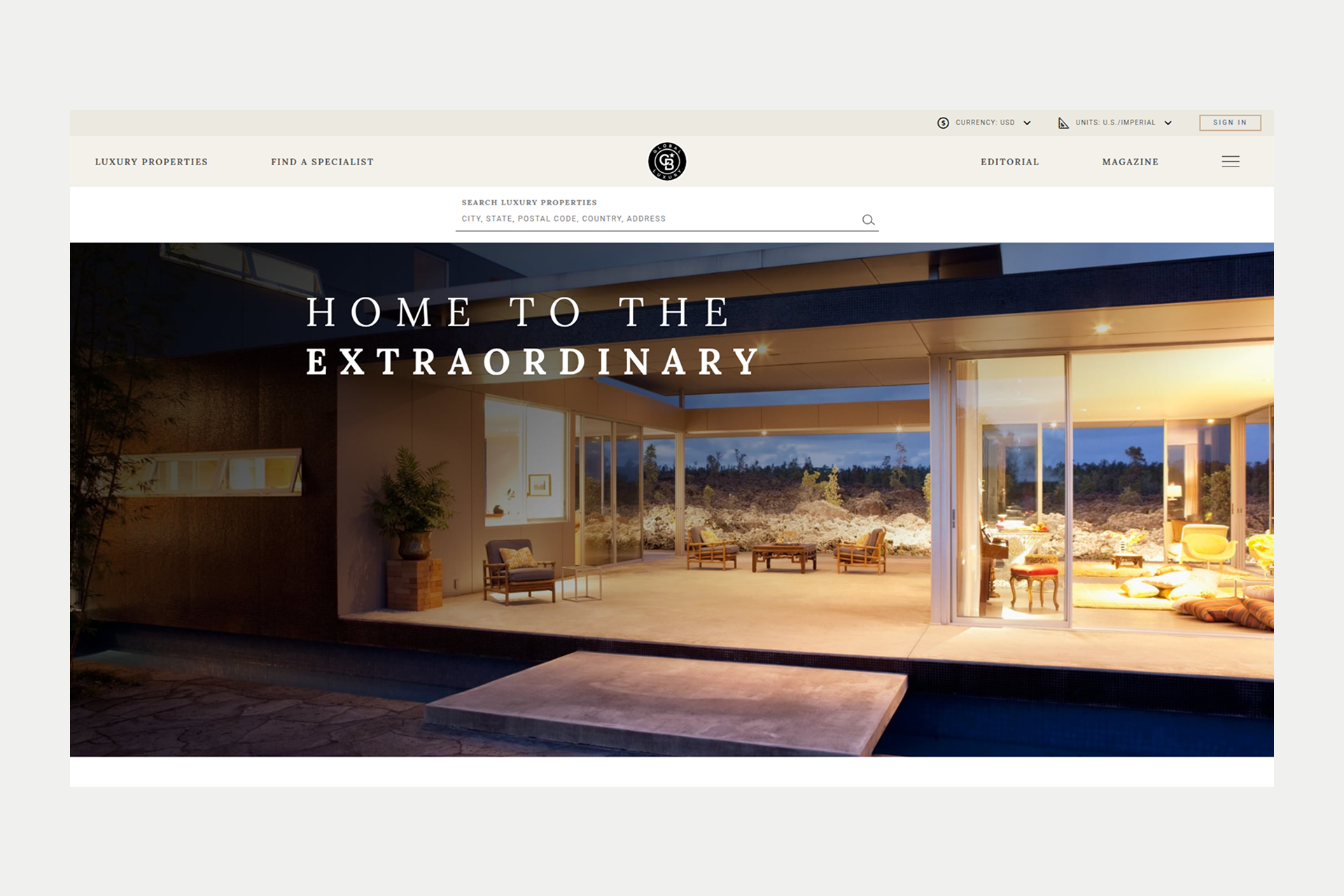
This site leans hard into trust and heritage. It’s more traditional than the "disruptor" sites, using elegant serif fonts and gold accents to signal high-end service.
Their secret weapon is "The Report" they prioritize market data and white papers right alongside property photos. This positions them as the serious choice for investors who want data-backed stability.
Side
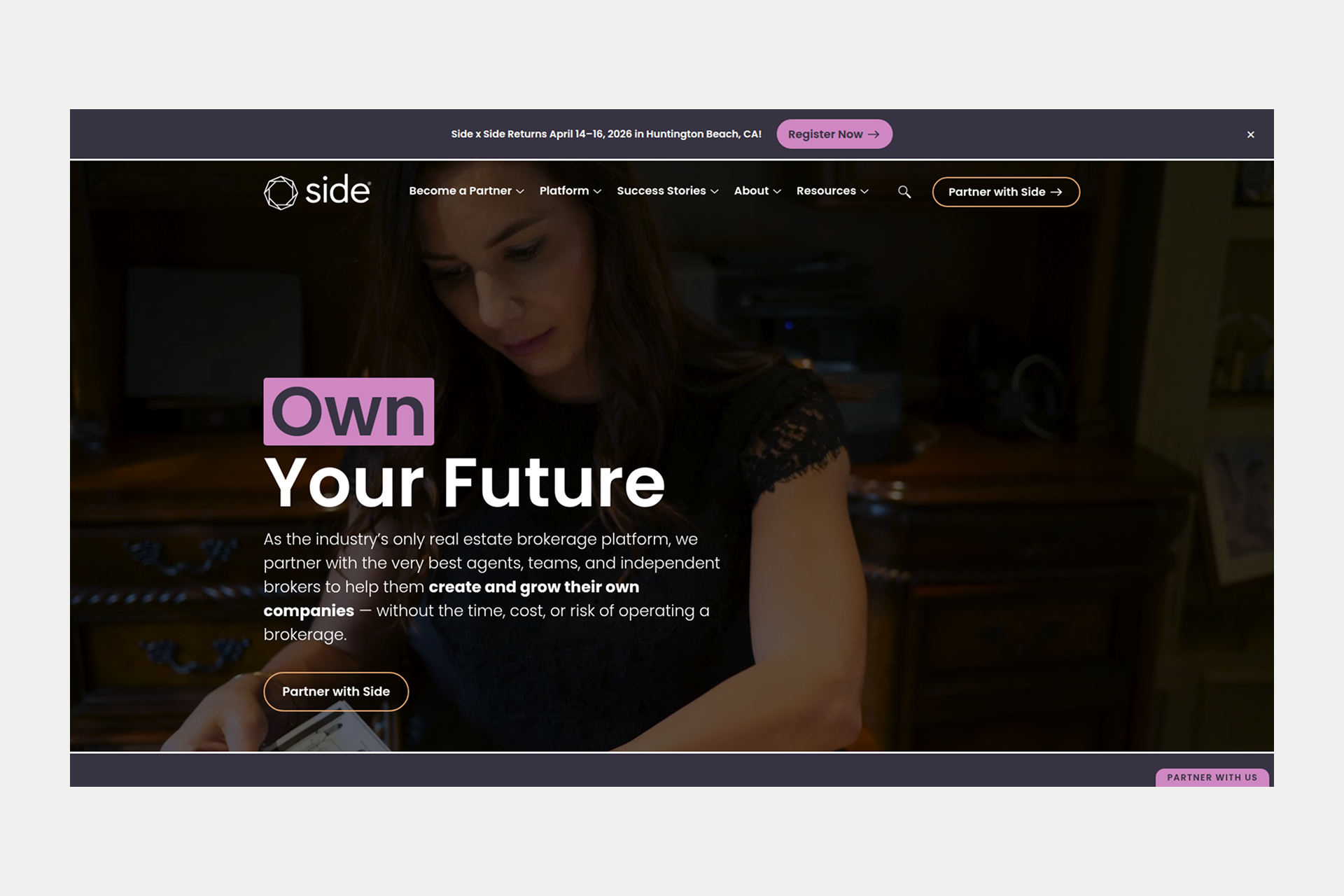
Side is unique because they don't market to buyers; they market to elite agents. Their design is professional and direct, focusing on growth metrics and tech-enablement.
It’s a B2B look, very clean and bold, meant to show top-tier agents that Side has the infrastructure to turn their names into independent brands.
Corcoran

Corcoran’s site is all about neighborhood vibes and confidence. They were the first to really nail "Neighborhood Guides," and it shows. The design is vibrant and energetic, centered around their "Live Who You Are" motto.
It feels more "human" and approachable than its competitors, using local lifestyle photography to help users imagine their life in a specific zip code, not just a specific building.
What can we learn from these real estate website examples
Across these examples, several design patterns consistently appear. Full-bleed hero imagery often sets the visual tone, while prominent search tools help visitors quickly explore listings.
Clean listing grids simplify browsing, agent team pages highlight expertise, and neighborhood-focused content helps demonstrate local knowledge. Testimonials are frequently integrated to reinforce trust and credibility.
Each example offers a specific design lesson:
Together, these sites illustrate how strong design and thoughtful structure can support both brand storytelling and property discovery.
Work with Shadow Digital
A strong real estate website should attract visitors and turn them into inquiries. If you're planning a new site or redesign, contact Shadow Digital to get started.
Frequently Asked Questions
What makes a great real estate website design?
A great real estate website balances visual inspiration with practical functionality. Visitors should immediately understand the brand and easily begin searching for properties. Strong designs combine high-quality photography, clear navigation, intuitive search tools, and strategically placed calls to action.
Property discovery must be simple, with well-organized listings and effective filtering options. At the same time, the site should reflect the brokerage’s identity through consistent branding, typography, and imagery. Lead capture also plays a key role, allowing visitors to contact agents, schedule showings, or request valuations without disrupting the browsing experience.
How important is photography for real estate websites?
Photography is one of the most important elements of a real estate website. Property images often determine whether visitors continue browsing or leave the site. Professional photography ensures homes appear polished and consistent across listings.
Strong real estate sites typically combine interior and exterior property images with lifestyle photography that helps buyers imagine living in the space. Consistent editing and color grading help maintain a cohesive visual experience. High-quality imagery also strengthens brand perception, particularly for luxury brokerages where visual presentation is closely tied to perceived value.
Should I use IDX or build my own property database?
Most real estate websites use IDX integration rather than building a standalone property database. IDX, or Internet Data Exchange, allows websites to display listings directly from the Multiple Listing Service while maintaining compliance with data-sharing rules.
This approach provides access to real-time property updates and avoids the complexity of maintaining a separate listing database. IDX providers such as iHomefinder, IDX Broker, and Showcase IDX offer tools that integrate listings, search filters, and property pages into brokerage websites.
What is IDX and why is it important for real estate websites?
IDX stands for Internet Data Exchange. It is a system that allows real estate websites to display property listings from the Multiple Listing Service (MLS). Through IDX integration, brokerages and agents can present up-to-date listings without manually maintaining their own database.
This ensures visitors see current information such as pricing, availability, and property details. IDX also supports advanced search functionality and filtering, which are essential for property discovery. By integrating MLS data directly into a website, IDX helps real estate professionals provide a complete property search experience while complying with industry data-sharing requirements.
How can I improve my real estate website's loading speed?
Loading speed has a direct impact on user engagement. Pages that take longer than a few seconds to load often lead visitors to leave the site. Real estate websites can improve performance by optimizing property images, which are typically the largest assets on the page.
Techniques such as image compression and lazy loading help reduce page weight while still displaying high-quality photos. Content delivery networks can also distribute assets more efficiently to users in different locations. Reducing unnecessary scripts and minimizing heavy design elements further improves loading times, particularly for property listing pages that contain many images.
What's the best platform for building a real estate website?
The best platform for a real estate website depends on the brokerage’s needs, design goals, and technical requirements. Many organizations prioritize platforms that support responsive design, flexible content management, and integration with IDX listing services.
A strong platform should allow teams to manage property pages, agent profiles, and local content while maintaining consistent branding. Performance, mobile optimization, and scalability are also important considerations. Real estate professionals typically evaluate platforms based on their ability to support listing search functionality, lead generation tools, and long-term content management.
What should be in a real estate website hero section?
The hero section sits at the top of the homepage and creates the first visual impression. Effective hero sections typically include high-quality imagery or video that communicates the brand’s style and the lifestyle associated with its properties.
Many real estate websites integrate property search directly into this section, allowing visitors to begin browsing immediately. Supporting elements often include a short headline that reinforces brand positioning and a primary call to action. The goal of the hero section is to establish emotional appeal while guiding users quickly toward property discovery or contact.
How do I design effective property listing pages?
Effective property listing pages present essential information clearly and prioritize visual content. Large photo galleries allow visitors to explore the property first, while critical details such as price, address, bedrooms, bathrooms, and square footage appear near the top of the page.
A well-structured description and organized features list help buyers understand the property quickly. Interactive maps provide location context, and virtual tours or videos can enhance the browsing experience. Prominent agent contact options or showing request forms are also important, ensuring interested visitors can easily take the next step.
What colors work best for real estate websites?
Color choices in real estate design often reflect the type of brokerage and its target audience. Luxury brands frequently use palettes built around black, white, and gold to convey exclusivity and sophistication. Residential agencies often prefer blue, white, and warm neutral tones that communicate trust and approachability.
Commercial real estate sites commonly use navy, gray, and green to create a professional and stable visual tone. Modern or urban-focused brands may rely on black-and-white palettes with bold accent colors. Regardless of palette, consistency across the website is essential for strong brand recognition.
How do I capture more leads on my real estate website?
Lead capture depends on making it easy for visitors to take action. Real estate websites often place contact forms, showing requests, and home valuation tools throughout the browsing experience. Property pages typically include inquiry forms or direct agent contact options.
Context-aware forms that reference a specific property can increase engagement because they align with user intent. Other effective strategies include newsletter signup options, saved property features, and clear calls to action that encourage visitors to schedule showings or speak with an agent.
What CTAs work best for real estate websites?
Effective calls to action clearly communicate the benefit of clicking. Instead of generic buttons such as “Submit,” real estate websites typically use action-oriented language tied to the visitor’s goal. Examples include “Schedule a Showing,” “Contact Agent,” or “Find Your Dream Home.”
Primary CTAs often appear in the hero section and property search areas. Additional CTAs may appear on listing pages, property detail pages, and in the site footer. Clear design, high contrast colors, and concise wording help CTAs stand out and guide users toward meaningful engagement.
How important is mobile optimization for real estate?
Mobile optimization is essential for real estate websites. A majority of property searches now occur on mobile devices, often while users are browsing listings on the go. Responsive layouts ensure that property listings, images, and search tools display correctly across different screen sizes.
Mobile-friendly navigation, simplified search forms, and swipeable image galleries help visitors explore properties easily. Click-to-call features are also important, allowing users to contact agents instantly from their phones. Fast loading speeds and touch-friendly interactions further improve the mobile browsing experience.