Best LLM Optimization Tools for AI Visibility

Let's Build Your Webflow Website!
Partner with experts who understand your vision. Let’s create a converting user experience and build your website for future growth.
Best LLM Optimization Tools for AI Visibility: The Enterprise Guide (2025)
Introduction to LLM Optimization Tools for AI Visibility
LLMs have proven to be game-changers in recent years, transforming from single-model endpoints into complicated AI systems. These days, a successful enterprise LLM pipeline is one that might involve:
- Retriever components pulling from vector databases
- Tool-use patterns
- Multi-step agent reasoning
- Orchestrated chains executing in parallel
- Governance and safety layers, such as guardrails and policy enforcement
- Model routing based on throughput or cost
- Continuous embedding generation
This complexity provides a wealth of opportunity, but it also presents new operational concerns. Even a single failure can reduce accuracy, increase costs, or even create compliance issues that may not become apparent at the time.
That’s why AI visibility has transformed into one of the key non-negotiables for any organization that’s looking to deploy LLMs at scale. With the right visibility, your team can identify issues, prevent runaway costs, and address problems with unpredictable user experience.
Modern LLM optimization tools can solve this problem by providing teams with real-time insight into model behaviour, performance drift, cost patterns, and chain reliability. To put it in simpler terms, they make the invisible visible.
What is AI Visibility and Why it Matters
AI visibility is the discipline of understanding precisely how your LLM system behaves across every stage of the lifecycle process, including from request to response, and from inference to evaluation. This includes:
- Tracing every step in a multi-action agent
- Measuring grounding accuracy in RAG systems
- Detecting hallucinations early
- Logging prompts, outputs, and metadata
- Monitoring cost and latency trends
- Surfacing hidden failure modes
- Watching for model drift
AI visibility plays a huge part in the way modern businesses are run, and a lot of it is about how to transform an unclear LLM into an auditable, measurable, and dependable system.
This is important because LLMs fail in some ways that traditional software does not. They degrade in the background. They can fail unexpectedly, and when things break down, even on a small scale, the ripple effects of this can be felt across the entirety of your business.
“You cannot scale an AI system responsibly without guardrails. For us, tracing is non-negotiable; without it, you’re burning budget in an endless loop trying to debug stochastic errors. I’m a big proponent of strategic logging. That’s how you catch a hallucination or a latency spike before it impacts the user experience.” - Muhammad Ukasha, Head of Development, Shadow Digital
For companies handling regulated data, visibility is crucial. Auditors, legal teams, and security groups need strong insight into how AI decisions are made.
Why Optimization Tools are Essential
LLM stacks have become more complex over the years, and as the complexity grows so does the risk of unseen failures. In 2025, the vast majority of enterprise AI systems are reliant on:
- Multi-agent reasoning
- Internal APIs and tool calls
- Structured chains (LangChain, LlamaIndex, custom orchestration)
- Retrieval-Augmented Generation
- Distributed inference workloads
- Vector storage and dynamic embeddings
Combining all these moving parts can create a system where problems are not obvious or evident, and are rarely isolated. However, LLM optimization tools are essential for helping to solve this problem, by providing:
- Observability
- Analytics
- Monitoring
- Evals
- Traceability
- Version control
- Cost intelligence
In enterprise AI terms, teams that have strong visibility will outperform those that don’t have strong visibility. This is because they ship updates faster, detect regressions earlier, reduce token spend, maintain consistent grounding, build more reliable agents, and resolve production failures in minutes rather than days.
In layman’s terms, visibility has now become a competitive advantage. It directly impacts your company’s KPIs, such as accuracy, reliability, and cost efficiency, making your AI product measurably better than competitors.
Core Features of LLM Optimization Tools

Modern LLM systems are too layered and in-depth to successfully operate blind. Optimizing in the right way requires comprehensive insight into difficulties, accuracy, performance and cost behaviour. The most successful tools for LLM optimization will provide these results via a selection of core capabilities they lay the groundwork for engineering, MLOps, and AI teams to understand precisely what’s occurring in their pipelines.
Here are core features that enterprise-grade LLM visibility platforms need to be offering:
Tracking, Monitoring & Observability
Observability is the most prominent part of ensuring AI visibility. It provides your teams with the insights required to see inside their LLM systems, and understand the way in which each individual component operates under real-world conditions.
- Powerful LLM observability tools must track the following:
- Hallucination indicators
- Retriever performance
- Latency metrics, such as end-to-end, per-agent, and per-model
- Failure points across multi-step chains
- Grounding scores and similarity metrics
- Token use and cost patterns
Enterprise tools require the ability to ingest logs and traces using OpenTelemetry or structured JSON logging. This helps to provide friction-free integration with existing monitoring stacks, such as Grafana, Splunk, and Datadog.
Observability isn’t simply about acquiring data. Instead, it’s about providing a clear, easy-to-understand view of what makes LLMs behave the way they do.
Prompt Management, Versioning & Logging
Prompt management is key to LLM operations. Prompts will quickly evolve based around scalability and teamwork, and untracked changes can lead to unexpected regressions.
- The right prompt management layer needs to support:
- Detailed logging of prompts and metadata
- Automated scoring
- A/B testing
- Prompt versioning
Enterprise-grade AI teams adopt structured configuration frameworks, including things like Hydra and ConfigStore. These are key for ensuring prompts, parameters, and chain logic remain efficiently and reproducible. This helps your teams guard against accidental regressions, which can be highly damaging.
Performance Evaluation & Analytics
LLM evaluations provide quality control and analysis of modern AI development. They’re essential for determining if a model’s performing the correct way with regards to accuracy, safety, grounding, and reasoning.
The most powerful tools support a multitude of eval types, including safety evals, agent evals, functional evals. Enterprises require support for custom evals. Domain-specific accuracy is far more essential than general-purpose scores.
Evaluation tools must support the creation of a Data Flywheel. This involves a continual loop of running evals, monitoring output, identifying gaps in performance, re-running evals, refining prompts, and deploying improvements.
This becomes an engine of constant improvement and automated model refinement.
Workflow Automation, Integration & Orchestration
As AI systems continue to scale, orchestration plays a big role. LLMs are incredibly powerful, but they can’t run without the relevant infrastructure, and this includes:
- Airflow, for workflow orchestration
- LangChain, and agent frameworks
- Kubernetes, for distributed inference
- CI/CD pipelines, for safe deployment
- Internal APIs
These are crucial elements that turn optimization into an automated loop rather than a manual process.
API-Level Extensibility for Enterprise Systems
APIs are the scalable optimization options enterprises need to thrive. The best visibility tools play a huge role in API access. This provides the following benefits:
- Scheduled eval cycles
- Auto-generated QA reports
- Custom dashboards
- Automated regression testing
- Latency-aware model routing
- Programmatic prompt deployment
ShadowDigital’s enterprise solutions provide API-level extensibility to integrate optimization workflows directly into customer pipeline, without the need to add engineering overheads.
Scalability & Enterprise Optimization
At scale, performance optimization is a balancing act that juggles speed, cost, and reliability. Fully functioning LLM stacks must support GPU throughput optimization, dynamic batching, token routing, and distributed inference frameworks.
Architecture choices can directly impact business outcomes.
Data Chart Placeholder, latency vs. throughput comparison across different deployment frameworks.
Selecting the right inference architecture depends on your latency profile, request volume, routing strategy, GPU allocation, and more. This often requires specialized AI infrastructure consulting and website migrations.
Evaluating & Benchmarking LLM Optimization Tools

Selecting the perfect LLM optimization platform to meet your needs requires more than a simple feature checklist. There are a plethora of tools providing monitoring, tracing, and analytics, so the real difference is dependent upon how deeply they support enterprise workflows. You also need to consider how well they integrate with your current stack, and how well they can scale under production load.
Teams need a structured evaluation framework for each tool to help them make more informed decisions. This shouldn’t just be based on capabilities, but, also, on how those translate into operational outcomes.
ShadowDigital utilises an enterprise-grade evaluation methodology when auditing client LLM systems, and comparing platforms. Find out more below.
Methodology & Evaluation Criteria
Choosing the right LLM optimization tool involves identifying the right system that provides a blend of accuracy, integration flexibility, and enterprise readiness. In order to achieve this, ShadowDigital uses this exact 4-factor evaluation methodology when auditing client LLM systems.
These are the core criteria most enterprise teams value:
#1. Observability Depth
This is to do with how much of the LLM’s behaviour the tool is actually able to reveal. Surface-level dashboards won’t be enough for teams building complicated AI products.
#2. Evals Quality and Customization
Evaluation systems can vary significantly across different tools. And quality evals allow teams to measure performance where it matters.
#3. Enterprise Readiness and Integration
A tool only works as well as it is able to integrate with your workflows. If it can’t integrate smoothly with your MLOps systems, it becomes a hindrance.
#4. Cost-to-Value Ratio
Price is important, but ROI should be the focus. The right tool needs to pay for itself by lowering regressions and accelerating iteration cycles.
4-Factor Decision Matrix
This 4-factor decision matrix helps provide AI leaders with a way of being able to compare tools in ways that influence business performance.
This is a key comparison matrix that forms the foundation of LLM tool comparisons.
Comparison of Top Tools (2025 Edition)
The current landscape of LLM optimization is expanding at a rapid rate. Currently in 2025, some of the major contenders include the likes of LangSmith, Helicone, W&B Evals, Ragas, and more.
HTML Comparison Table:
<table>
<thead>
<tr>
<th>Tool</th>
<th>Observability Depth</th>
<th>Evals Support</th>
<th>Cost per Output</th>
<th>Best For</th>
</tr>
</thead>
<tbody>
<tr>
<td>LangSmith</td>
<td>Advanced</td>
<td>Comprehensive</td>
<td>Medium</td>
<td>RAG pipelines, agent tracing, prompt versioning</td>
</tr>
<tr>
<td>Helicone</td>
<td>Moderate</td>
<td>Good</td>
<td>Low</td>
<td>Cost tracking, token analytics, OpenAI proxying</td>
</tr>
<tr>
<td>W&B Evals</td>
<td>High</td>
<td>Best-in-class</td>
<td>Medium</td>
<td>Custom eval pipelines, experimentation workflows</td>
</tr>
<tr>
<td>Arize Phoenix</td>
<td>Advanced</td>
<td>Good</td>
<td>Medium</td>
<td>Drift detection, embedding analytics, RAG visibility</td>
</tr>
<tr>
<td>Ragas</td>
<td>Moderate</td>
<td>Strong for RAG</td>
<td>Free / Open Source</td>
<td>RAG evaluation, grounding score analysis</td>
</tr>
</tbody>
</table>
Core differences
LangSmith
- Leading choice for LLM engineers building in-depth chains
- Excellent A/B testing and prompt versioning
- Elite-tier structured logging and debugging
Helicone
- Minimal overheads
- Perfect for cost analytics
- Budget-friendly
W&B Evals
- Powerful platform for custom evaluation
- Strong integration
- Ideal for research-heavy teams
Arize Phoenix
- Brilliant embedding analytics
- Leading option for drift detection
- Strong dashboards for RAG-specific issues
Ragas (Open Source)
- Free and flexible
- Pairs seamlessly with LangChain
- Industry-approved for grounding evaluation
Advanced Capabilities for Enhancing AI Visibility

As LLM and AI systems grow in complexity, visibility must extend well beyond basic metrics, such as latency and token counts. The top-performing AI organizations recognize the importance of end-to-end observability across all components in their pipelines. Visibility becomes about more than simply monitoring; it’s using advanced analytics to continuously improve performance.
Observability Platforms & Full-Stack Monitoring
Advanced LLM observability platforms provide a full-stack overview of distributed AI systems. They reveal the way data moves, how decisions are made, and what causes failures to start. The core capabilities include:
Vector Store Analytics
Visibility in vector databases plays a huge role in any RAG system, as teams need metrics like similarity scores, embedding overlap percentages, query drift, retriever recall and precision, and retrieval latency breakdowns. Weak retrieval is an common hidden failure mode you need to identify because it’s expensive to deal with.
Retriever and Reranker Performance
If you want full visibility you need to understand which passages were retrieved, what their correct status was, and how LLMs utilize them. This is where you can use coverage scores, grounding metrics, and attribution analysis.
Multi-Step Agent Trace Visualization
Modern systems can often span lots of steps, which is why you need tools that show every action, branching logic, tool calls (and results), retry patterns, hidden failure paths, and more. This is key for evolving agent behavior into an organized and auditable workflow diagram.
AI Visibility Analytics & Actionable Insights
As soon as observability reveals what’s happening inside an LLM pipeline, analytics show precisely why it is happening. Advanced AI visibility analytics allow your teams to diagnose failures, detect changes in behavior, uncover risks, and take action to fix problems before they get worse.
Drift and Degradation Detection
Drift is something that occurs when an LLM’s behavior alters over time. This can often happen subtly, and is typically caused by changing user queries, decaying embeddings, or updates to retrieval pipelines. The most effective visibility tools uncover drift through statistical drift tests, P-value thresholds for significance, time-series comparisons, retriever quality degradation detection, and more.
Setting up these statistical drift evaluations is highly complex, and this is what leads many teams to choose LLM monitoring and observability services to help configure and maintain evaluations.
Drift is one of the biggest failure models because it can result in unpredictable performance issues well before you or your team realise there’s a problem.
Semantic Clustering for Failure Analysis
Reviewing failures one-by-one is a suboptimal approach. Semantic clustering is better as it groups related errors together, giving greater clarity to teams. This allows them to:
- Prioritize specific fixes
- Identify where retrieval is breaking down
- Quantify the severity of problem groups
- Isolate systemic problems
- Spot patterns of recurring failure
Compliance Signal Visibility
For sectors that have legal requirements, visibility has to include compliance-focused signals as well. Advanced platforms can highlight high-risk language patterns, bias indicators, policy & safety violations, restricted-content triggers, and missing citations.
These signals are key because they ensure that LLM-powered systems remain compliant, auditable, and safe. This is especially pertinent in heavily regulated environments such as finance, healthcare, legal, and public sector.
Use-Case-Specific Optimization Strategies
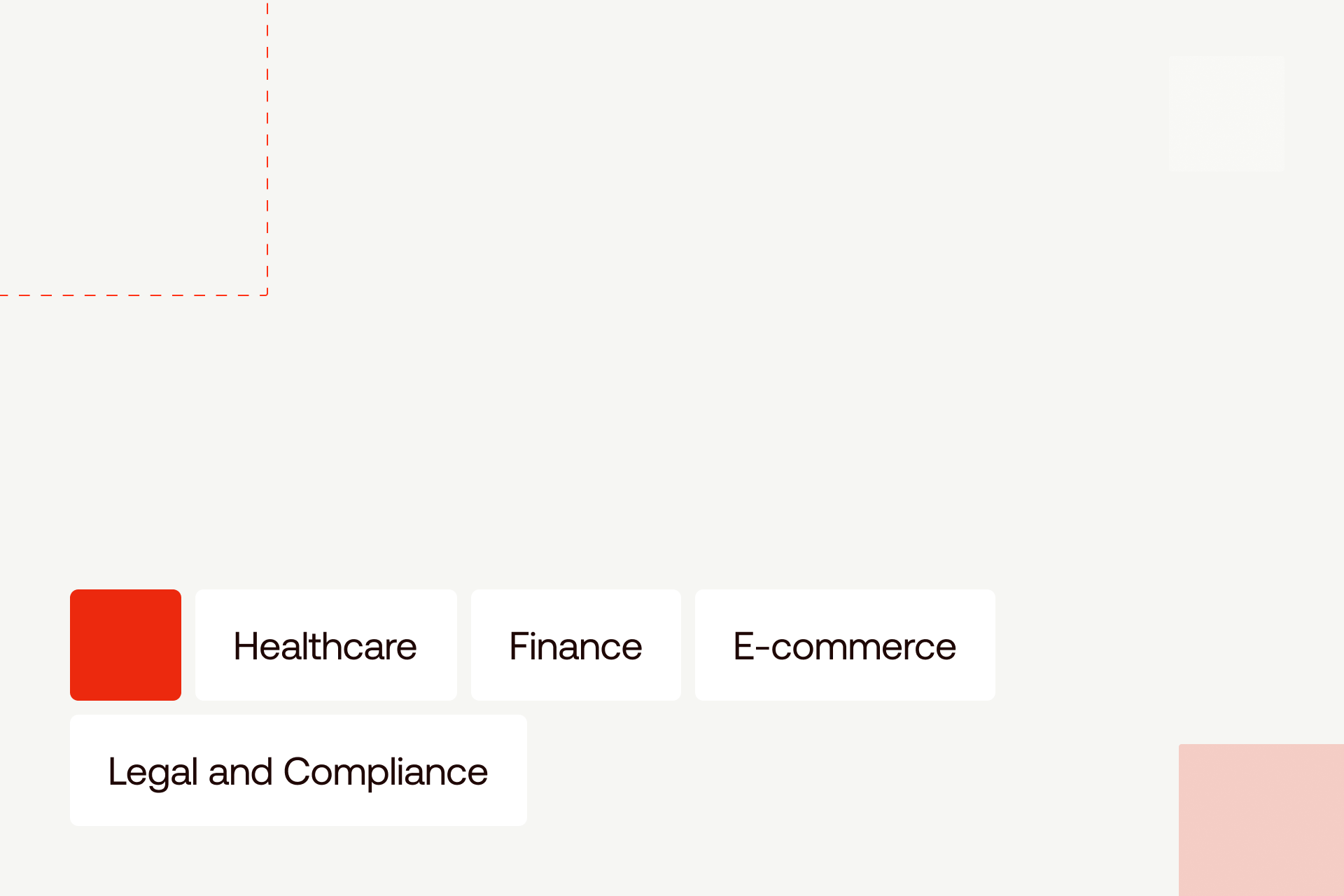
It’s true that not all LLMs operate (or thrive) under the same conditions. Different industries face different risks, accuracy requirements, and user expectations. This means visibility and optimization approaches have to be sculpted to specific environments. These are some examples of how AI visibility applies across high-impact industries:
Healthcare
Healthcare AI systems are incredibly complex, and require the highest security levels due to regulatory requirements, and patient safety. Visibility strategies include detection of medical terminology drift, HIPAA-compliant audit trails, monitoring for unsafe recommendations, visibility into retrieval quality for medical knowledge bases, and more.
Finance
Similarly to healthcare, financial systems need very high levels of accuracy, transparency, and security. Visibility tools here are focused on fact-checking output from models against internal data, identifying hallucinated entities, flagging high-risk language, detecting shifts in risk classification, and auditing multi-step reasoning.
E-commerce
E-commerce has lots of rapidly shifting data, product catalogs, and high-volume customer interactions. The strategies here include retrieval quality monitoring, RAG evaluation for product searches, clustering customer query failures, attribution analysis for recommendation, and similarity-score drift. Accurate retrieval is paramount to boosting conversion rates.
Legal and Compliance
Legal workflows require precise and defensible outputs, centered on citation accuracy, identification of ambiguous statements, reasoning chain audits for legal decision-making, detection of policy violations, and monitoring for risky phrasing.
Future Trends & Best Practices
As AI and LLMs become more commonplace, the optimization element is beginning to move away from static testing. Enterprises are looking to become more fluid, with an eye on integrating observability with the ability to experiment.
Emerging Trends in LLM Optimization
Indeed, even as LLM adoption starts to become more widespread, optimization is also shifting from a one-off process to something more continual. Instead of assessing separate elements of the business, high-performance teams are combining them into a single feedback loop primed to run in real-time.
There are three main trends that are shaping the future of LLM optimization.
Real-Time Evals
In years past, evaluations were generally run periodically, on static datasets. Nowadays, evals are happening with live traffic. Teams are being more proactive with their evals, sampling real user queries, running automated (rolling) evals, scoring output for safety and accuracy, and feeding scores back into the system.
The move toward real-time allows teams to be more adaptive and proactive, catching regressions and drift as they’re happening, rather than after they’ve already caused damage.
Automated Adaptive Routing
A move toward automated adaptive routing is another emerging trend. This refers to where traffic is routed dynamically between models, based on certain factors. Now, instead of hard-coding, systems route simpler queries to faster models, route more complex queries to more in-depth models, adjust routing based on cost or latency, and incorporate eval feedback to help define use.
Unified Observability/Tuning Platforms
Finally, the third, and arguably the most important, major trend expected in the near future, is consolidation. Rather than trying to shoehorn different tools and analytics together, teams are moving more toward unified observability and tuning platforms. These support both optimization online, and experimentation offline. They also help to combine traces, metrics, and eval results in one database, linking production behavior direct to prompt and model versions, and they act as a unified control center for LLM performance.
This all serves to make LLM optimization more of an integrated discipline as opposed to a collection of disparate tools.
Best Practices for Maximizing AI Visibility
Maximizing AI visibility needs operational discipline instead of random, sporadic fixes. The most successful teams follow best practices that will help keep their LLM systems more reliable, making optimization easier.
Continuous Evals
Be sure to run evals on a rolling basis by sampling real user queries, and scoring accuracy, grounding, and safety. Continuous evaluation reduces the risk of drift and regressions.
Structured Prompt Versioning
Use structured version control for prompts, chain logic, and parameters. Make sure to version every stage, run the relevant A/B tests for updates, and maintain auditability.
Integration into CI/CD Workflows
Prompt checks, consistency tests, and evals should be embedded directly into CI/CD pipelines. This helps ensure new models are automatically validated before deployment.
Continuous Improvement and Feedback Loops
In LLM systems, continuous improvement is driven by the Data Flywheel - the ongoing process involved in collecting data, evaluating outputs, refining prompts, and making the right improvements. Fast-moving teams are proactive enough to pair human feedback cycles with automated prompt refinement.
These feedback loops keep model performance as optimal as possible, allowing them to improve continuously, rather than occasionally.
FAQs
General Understanding
What is AI visibility in LLM systems?
AI visibility is the term for how LLMs behave across the different stages of your pipeline, through the monitoring of prompts, system-wide tracing, evaluation insight, outputs, latency, etc.
Why do LLMs require visibility tools?
LLMs need visibility tools to monitor their failures in a way that draws attention to them, as well as tracking drift, cost overruns, hidden failure modes, retrieval, and behavior. This reveals issues that need to be fixed promptly.
What’s the difference between evals and observability?
Evals use tests to measure output quality, while, conversely, observability tracks system behavior via logs and metrics throughout the pipeline.
What is LLM prompt versioning?
LLM prompt versioning refers to the process of tracking and managing all changes to prompts to protect against regression, and maintain auditability
Technical & Engineering
How do you measure hallucination rates?
Hallucination rates are measured via grounding checks, citation accuracy, or automated evals that compare against verified sources.
How does drift detection work in LLMs?
Drift detection works via the use of statistical tests, P-value thresholds, embedding drift, retriever degradation, and time-series comparisons in order to identify changes in long-term output behavior
What are grounding scores?
Grounding scores are used to measure how closely LLM responses align with retrieved source data.
What is agent-level observability?
It tracks every action within a multi-step agent, including branching logic, tool calls, and final reasoning paths.
How do you evaluate retriever performance in RAG?
It’s evaluated through the use of recall, query drift, precision, similarity scores, and how relevant the retrieved passages are to the query.
What metrics matter most for LLM visibility?
The optimal metrics for LLM visibility include cost per output, latency, hallucination frequency, grounding accuracy, retrieval quality, and drift signals.
Tool Comparison
What is the best LLM optimization tool for enterprises?
LangSmith is typically regarded as the strongest LLM optimization tool for enterprises, thanks largely to its deep tracing, prompt versioning, and eval support.
What’s the difference between LangSmith and Helicone?
LangSmith’s focus is largely on observability and evals, while Helicone emphasizes token analytics, lightweight monitoring, and cost tracking.
Is W&B Evals better than Ragas?
It depends what you’re looking for. W&B Evals is better for custom, enterprise-scale evaluation workflows, while Ragas is best for grounding, and free, RAG-specific evaluation.
Which LLM visibility tool has the best dashboard?
Arize Phoenix has among the most comprehensive dashboards, especially when it comes to drift detection and embedding analytics.
What’s the best free LLM monitoring tool?
The best free option on the market right now is Ragas, which is ideal for RAG evaluation, grounding analysis, and open-source workflows.
Implementation & Buying Decisions
How do I integrate an LLM monitoring tool into my workflow?
Use API clients and SDKs to connect structured logging and traces, enable prompt logging, and embed eval runs into CI/CD.
What features should I look for in a visibility platform?
Look for eval support, deep tracing, cost analytics, drift detection, and integrations with the existing stack.
How do I choose between open-source and paid tools?
Open-source provides cost-effective flexibility, while paid tools are far better for scalability and security.
How much do LLM observability tools typically cost?
Costs vary, depending on what you’re looking for. Many will charge per-token, or usage-based billing. This can range anything from a few hundred to a few thousand dollars per month.
SEO/Long-Tail Ranking Questions
What is the best LLM optimization tool in 2025?
LangSmith is the leading choice for 2025, due to its integration features, tracing depth, eval support, versioning, RAG visibility, and deep observability.
How do I monitor LLMs in production?
Monitor LLMs with tools that track logs, prompts, traces, retrieval steps, and output quality.
What tools help reduce hallucinations?
You can reduce hallucinations with tools like Ragas, Arize Phoenix, and LangSmith. They do this through grounding evals, retrieval analysis, and attribution scoring.
What tools help optimize RAG performance?
LangSmith, Ragas, and Arize Phoenix are all great for evaluating retriever-level metrics, and overall RAG pipeline performance.
What are the top AI visibility tools?
The aforementioned LangSmith, Helicone, W&B Evals, Arize Phoenix, and Ragas are the top AI visibility tools on the market.
Glossary
Grounding Score
Your grounding score is a measure of how accurately an LLM’s output aligns with reference source data. High scores indicate strong factual consistency and lower risk of hallucination.
Semantic Clustering
Semantic clustering groups similar queries, outputs, and errors together based on meaning. This helps teams identify recurring failure patterns and prioritize targeted improvements.
Agent Trace
Agent trace is a step-by-step record showing every action an agent takes, including tool calls, branching logic, retries, and reasoning paths, providing full visibility into complicated workflows.
LLMOps
LLMOps refers to the deploying, evaluating, monitoring, and optimizing LLMs in production environments.
RAG
Stands for retrieval-augmented generation is an AI architecture that sees LLMs retrieve relevant source documents, and then use them to generate grounded responses.
Latency Profile
Latency profiles describe the time it takes for each part of an LLM pipeline, including interference, retrieval, tool use, and post-processing, to complete. This is key for helping teams optimize speed and throughput.
Drift Detection
Drift detection involves the use of statistical analysis, P-value tests, embedding comparisons, and time-series signals to identify changes in LLM behavior.
Token Usage
This refers to the number of tokens consumed by an LLM request, which covers input prompts, retrieved context, and generated outputs. The result directly impacts cost and model efficiency.